

 David Chen
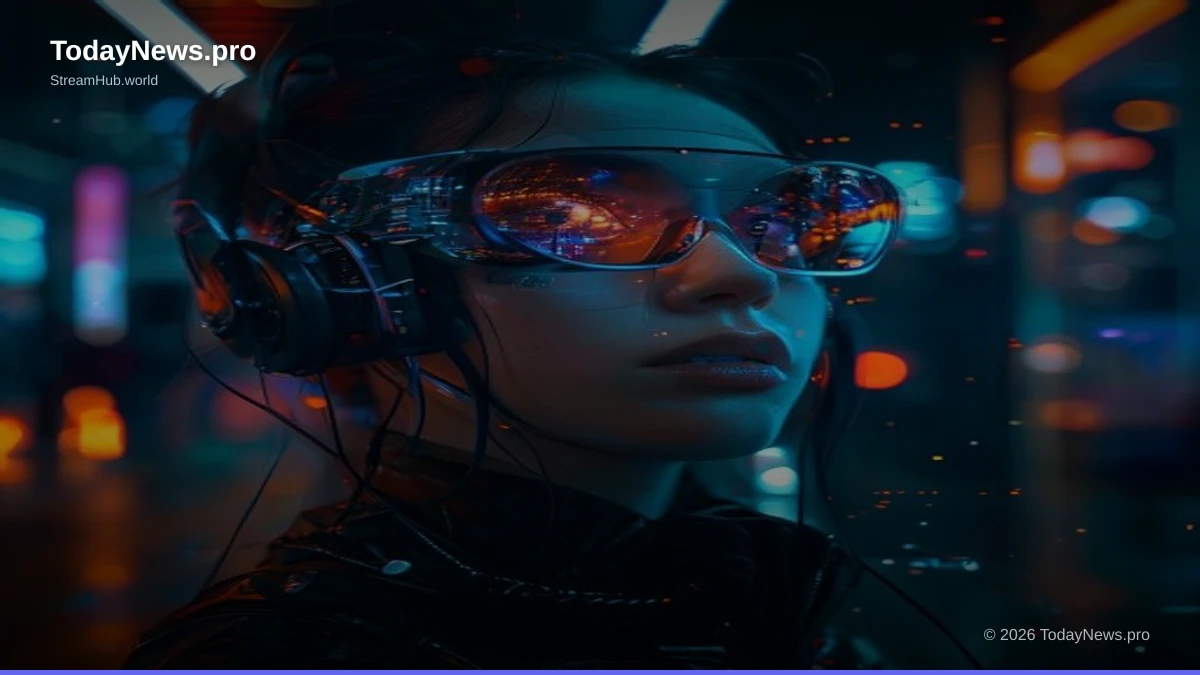
⏱ 15 min
The global market for Extended Reality (XR), encompassing Augmented Reality (AR), Virtual Reality (VR), and Mixed Reality (MR), is projected to reach $100 billion by 2025, signaling a profound shift in how we interact with information and our environment. The Seamless Weave: Blended Realitys Arrival
For decades, the concepts of augmented and virtual realities existed primarily within the realms of science fiction and niche technological applications. Today, however, these immersive technologies are no longer confined to futuristic visions. They are steadily, and often imperceptibly, weaving themselves into the fabric of our daily lives, transforming how we work, play, learn, and connect. This phenomenon, often termed "blended reality," represents a significant evolution, moving beyond isolated experiences to create a cohesive, digitally enhanced existence. The lines between the physical and digital worlds are blurring, not through outright replacement, but through sophisticated overlay and integration. We are entering an era where our perception of reality is increasingly mediated and enriched by digital information and interactive environments. This isn't just about putting on a headset; it's about experiences that augment our immediate surroundings, provide deeper context, and offer entirely new modes of engagement. The rapid advancement in hardware, from more sophisticated headsets and smart glasses to enhanced mobile device capabilities, has been a significant catalyst. Coupled with breakthroughs in software, artificial intelligence, and connectivity, these technologies are becoming more accessible, affordable, and intuitive. This democratization of immersive technologies is key to their widespread adoption. Early iterations were often clunky, expensive, and limited in functionality. The current generation, however, offers a far more refined and practical user experience, making them viable tools for everyday tasks and leisure activities alike. The journey from novelty to necessity is well underway. The underlying technological advancements are multifaceted. Powerful processors, improved battery life, and high-resolution displays are making AR and VR devices more practical for extended use. Sophisticated sensors, including cameras, gyroscopes, and accelerometers, enable precise tracking and interaction within digital or augmented environments. Furthermore, the development of robust software platforms and content creation tools is fostering a richer ecosystem of applications, driving innovation and user engagement. The synergy between hardware and software is creating a virtuous cycle of improvement and adoption.Defining the Spectrum: AR vs. VR and the Blended Middle
To understand blended reality, it's crucial to differentiate between its constituent technologies: Augmented Reality (AR) and Virtual Reality (VR). While often discussed together, they offer distinct user experiences.Augmented Reality (AR): Layering the Digital onto the Physical
AR technology overlays digital information, such as images, sounds, or text, onto the user's real-world view. This is typically achieved through smartphones, tablets, or specialized AR glasses. The user remains fully aware of their physical surroundings, with digital elements seamlessly integrated. Think of navigation apps displaying directions directly on your street view, or virtual furniture placed in your living room to gauge its fit before purchasing. The key characteristic of AR is its ability to enhance, rather than replace, reality. It provides context and additional information without disconnecting the user from their immediate environment. This makes it particularly suited for applications requiring real-time interaction with the physical world, such as industrial maintenance, medical procedures, or educational experiences that bring historical sites to life.Virtual Reality (VR): Complete Immersion in Digital Worlds
VR, on the other hand, completely immerses the user in a digitally created environment. This is achieved through head-mounted displays (HMDs) that block out the real world, presenting a new, interactive reality. VR offers a profound sense of presence, allowing users to explore, interact, and experience simulated environments as if they were physically there. From gaming and entertainment to training simulations and virtual travel, VR offers unparalleled escapism and experiential learning. The defining feature of VR is its ability to transport users to entirely new spaces, free from the constraints of their physical location. This deep immersion is powerful for applications where replicating or experiencing environments that are otherwise inaccessible is key. The psychological impact of VR can be significant, fostering empathy and understanding through simulated experiences.Mixed Reality (MR): The True Blended Experience
Mixed Reality (MR) sits at the intersection of AR and VR, often considered the most advanced form of blended reality. MR not only overlays digital information onto the real world but also allows digital objects to interact with and be affected by the physical environment. This means digital elements can be anchored to real-world surfaces, cast shadows, and respond to physical objects. Imagine a virtual ball bouncing off a real table. This level of interaction creates a truly blended experience where digital and physical elements co-exist and influence each other dynamically. MR devices, such as Microsoft's HoloLens, are designed to facilitate this seamless integration. They map the user's environment and allow for precise placement and interaction with virtual objects. This capability opens up profound possibilities for collaborative design, complex problem-solving, and highly intuitive human-computer interfaces.Augmented Reality: Enhancing Our Physical World
AR's integration into daily life is perhaps the most pervasive, often appearing in familiar forms before we even recognize it as "blended reality." Mobile AR applications have become commonplace, transforming our smartphones into portals for digital enhancement.Everyday Applications of AR
One of the most visible applications of AR is in e-commerce. Platforms like IKEA Place allow users to virtually place furniture in their homes, visualizing how different pieces would look and fit before making a purchase. Similarly, beauty retailers offer virtual try-on experiences for makeup and accessories. These tools not only enhance the shopping experience but also reduce returns by providing a more informed purchasing decision.80%
of consumers willing to pay more for AR-enhanced shopping experiences.
3x
higher engagement rates for AR advertising campaigns.
40%
reduction in training time with AR-guided assembly.
"AR is not just about overlaying information; it's about contextually delivering it at the precise moment and place it's most useful. This subtle shift has profound implications for efficiency and user experience."
— Dr. Anya Sharma, Lead XR Researcher, TechNova Institute
AR in Education and Training
The educational sector is embracing AR to create more engaging and interactive learning experiences. Textbooks can come alive with 3D models of historical figures or scientific concepts. Students can dissect virtual frogs or explore the human circulatory system in a way that was previously impossible. This hands-on, visual approach can significantly improve comprehension and retention. In professional training, AR offers invaluable benefits. Technicians can receive step-by-step visual guidance for complex repairs, overlaying digital instructions onto machinery. Medical students can practice surgical procedures on virtual patients, gaining experience without risk. This not only speeds up the learning curve but also enhances safety and precision.The Rise of AR Glasses
While smartphones are the primary AR interface today, the future points towards AR glasses. Devices like Google Glass (in its enterprise edition) and the upcoming Apple Vision Pro are paving the way for a more hands-free and integrated AR experience. These wearables promise to deliver contextual information and digital interactions without requiring users to constantly look at a handheld device, truly blending the digital into our field of vision.Virtual Reality: Immersive Escapes and New Frontiers
VR, while perhaps more visually distinct in its current form, is also expanding its influence beyond gaming into areas that profoundly impact our lives. The sense of presence VR offers is its most compelling feature.VR Beyond Gaming
The gaming industry was an early adopter of VR, but its potential extends far beyond entertainment. VR simulations are revolutionizing fields like psychotherapy, where patients can confront phobias in a safe, controlled environment. Exposure therapy for PTSD, for instance, can be significantly enhanced through VR. In the realm of travel, VR allows individuals to "visit" destinations before booking a trip or to explore places they may never physically reach due to mobility limitations or cost. This provides a powerful form of armchair tourism and can be a significant aid for accessibility.Training and Simulation with VR
The fidelity of VR simulations makes it an ideal tool for high-stakes training. Pilots train in realistic flight simulators, surgeons hone their skills on virtual patients, and emergency responders can practice complex scenarios in VR environments that mimic real-world emergencies. This reduces risk, lowers costs associated with physical training, and allows for repeatable, measurable practice.Growth in VR Training Applications
The Future of VR in Social Interaction
While social media connects us digitally, VR is exploring ways to foster more embodied and present social interactions. Platforms like VRChat and Meta's Horizon Worlds allow users to interact as avatars in virtual spaces, attend events, and build communities. This has the potential to redefine remote socialising and collaboration, offering a deeper sense of connection than traditional video calls.The Convergence: Where Worlds Collide
The true power of blended reality lies not just in AR or VR individually, but in their convergence and the development of Mixed Reality. This is where the most profound integrations into daily life are expected.MR Devices and Their Potential
MR devices are the gatekeepers of this converged future. They can seamlessly switch between AR overlays and fully immersive VR experiences, or blend the two in sophisticated ways. This adaptability makes them suitable for a vast range of applications. For example, an architect could use an MR headset to walk through a virtual building model while simultaneously seeing how it integrates with the real-world site. The sophistication of spatial mapping and object recognition in MR devices allows for unprecedented interaction. Digital objects can be treated as if they were physical, leading to more intuitive and natural user interfaces. This is a significant step towards a future where digital interfaces are not confined to screens but are integrated into our physical space.The Metaverse Concept
The concept of the "metaverse" is deeply intertwined with blended reality. It envisions persistent, interconnected 3D virtual worlds where users can interact with each other, digital objects, and AI. While the metaverse is still in its nascent stages, blended reality technologies are the primary enablers of this vision. Whether accessed through VR headsets for full immersion or AR glasses for overlaying digital assets onto the real world, these technologies form the foundation for what could become the next iteration of the internet. The metaverse promises to offer new avenues for work, entertainment, socialising, and commerce, all within a spatially aware and interactive digital environment. It represents a significant paradigm shift, moving from a 2D web of pages to a 3D web of experiences.50%
of metaverse users expect to use it for work-related activities.
75%
of Gen Z have already experienced some form of VR or AR.
Impact Across Industries: Beyond Entertainment
The transformative potential of blended reality is rippling across nearly every industry, moving far beyond its initial association with gaming and entertainment.Manufacturing and Industrial Applications
In manufacturing, AR and MR are revolutionizing assembly lines, maintenance, and quality control. Workers can use AR glasses to see real-time assembly instructions overlaid onto machinery, reducing errors and increasing efficiency. For maintenance, technicians can access digital manuals and diagnostic information directly within their field of view. This dramatically cuts down downtime and improves the accuracy of repairs.| Industry | AR/VR Application | Estimated Efficiency Gain |
|---|---|---|
| Manufacturing | Assembly guidance, remote expert assistance | 15-30% |
| Healthcare | Surgical training, patient education, remote diagnosis | 10-25% |
| Retail | Virtual try-on, product visualization | 10-20% |
| Architecture & Construction | Design visualization, on-site guidance | 15-25% |
Healthcare Innovations
The healthcare sector is seeing significant advancements. Surgeons can use AR to overlay patient scans and vital signs during operations, enhancing precision and safety. Medical students benefit from immersive VR training for complex procedures. Furthermore, AR is being explored for pain management and rehabilitation, using engaging virtual environments to distract from discomfort or guide therapeutic exercises.Architecture, Engineering, and Construction (AEC)
In AEC, blended reality allows for unprecedented visualization and collaboration. Architects can present designs to clients by letting them walk through virtual models of buildings on-site. Engineers can identify clashes and potential issues in complex designs before construction begins, saving significant time and resources. On-site construction workers can use AR to visualize blueprints and compare them with the actual work being done."The ability to visualize complex data in 3D space, overlaid onto the real world, is fundamentally changing how we design, build, and maintain our physical infrastructure. Blended reality is no longer a novelty; it's becoming an essential tool for efficiency and innovation."
— David Chen, Chief Innovation Officer, GlobalBuild Corp
Challenges and the Road Ahead
Despite the rapid progress, several hurdles remain before blended reality becomes as ubiquitous as smartphones.Hardware Limitations and Cost
While prices are decreasing, high-end VR and MR headsets remain a significant investment for many consumers and businesses. Furthermore, issues like battery life, comfort for extended wear, and the need for powerful processing devices still present challenges. The bulkiness of current headsets also limits their seamless integration into everyday activities.Content Creation and Ecosystem Development
A robust ecosystem of compelling content is crucial for widespread adoption. Developing high-quality AR and VR experiences requires specialized skills and tools, which are still maturing. Ensuring interoperability between different platforms and devices is also a key concern for a truly seamless blended reality experience.User Adoption and Societal Impact
Beyond the technology, societal acceptance and user behaviour are critical. Concerns about privacy, data security, potential for addiction or escapism, and the ethical implications of altering our perception of reality need careful consideration and open discussion. The potential for digital divide to widen if access remains unequal is also a significant societal challenge.For more information on the evolution of immersive technologies, see Wikipedia's entry on Virtual Reality and Augmented Reality.
The Importance of Interoperability
As different companies develop their own XR platforms, the lack of interoperability can fragment the ecosystem. A user might have a piece of digital content tied to one platform that cannot be easily used on another. Future advancements will likely focus on open standards to allow for a more cohesive and interconnected blended reality experience, much like how the internet evolved.The Future is Here: Embracing the Blended Reality
The trajectory of blended reality is clear: it's moving from specialized applications to an integral part of our daily lives. The subtle enhancements of AR and the profound immersion of VR, increasingly unified by MR, are poised to redefine our interaction with the digital and physical worlds.A Gradual Integration
The transition will likely be gradual, with AR making its presence felt through our smartphones and increasingly sophisticated smart glasses, while VR continues to offer dedicated immersive experiences. MR devices will act as the bridge, enabling dynamic interactions between the digital and physical. This layered approach ensures that users can adopt these technologies at their own pace and according to their needs.The Evolving Definition of Reality
As blended reality matures, our very definition of "reality" will likely expand. We will become accustomed to interacting with digital overlays that provide instant context, collaborating with colleagues in shared virtual spaces, and experiencing entertainment that blurs the lines between the tangible and the imagined. This evolving perception will shape how we work, learn, and connect in the coming decades. The opportunities are immense, offering enhanced productivity, deeper learning, richer entertainment, and new forms of social connection. Navigating the challenges with thoughtful development and societal dialogue will be key to unlocking the full, positive potential of this transformative technological wave. The blended reality is not a distant future; it is an unfolding present.What is the difference between AR and VR?
Augmented Reality (AR) overlays digital information onto the real world, enhancing your existing view. Virtual Reality (VR) immerses you completely in a digitally created environment, blocking out the real world.
Is blended reality just a buzzword?
No, blended reality is a term used to describe the convergence of Augmented Reality (AR), Virtual Reality (VR), and Mixed Reality (MR) technologies, which are increasingly integrating into daily life and creating new forms of user experiences.
When will AR glasses be common?
While AR glasses exist, widespread consumer adoption is expected to grow significantly over the next 5-10 years as hardware becomes more affordable, comfortable, and capable, and as more compelling applications emerge.
What are the main concerns about blended reality?
Key concerns include privacy, data security, the potential for addiction or over-reliance on digital experiences, the ethical implications of altering perception, and ensuring equitable access to avoid widening digital divides.