

 Sarah Jenkins
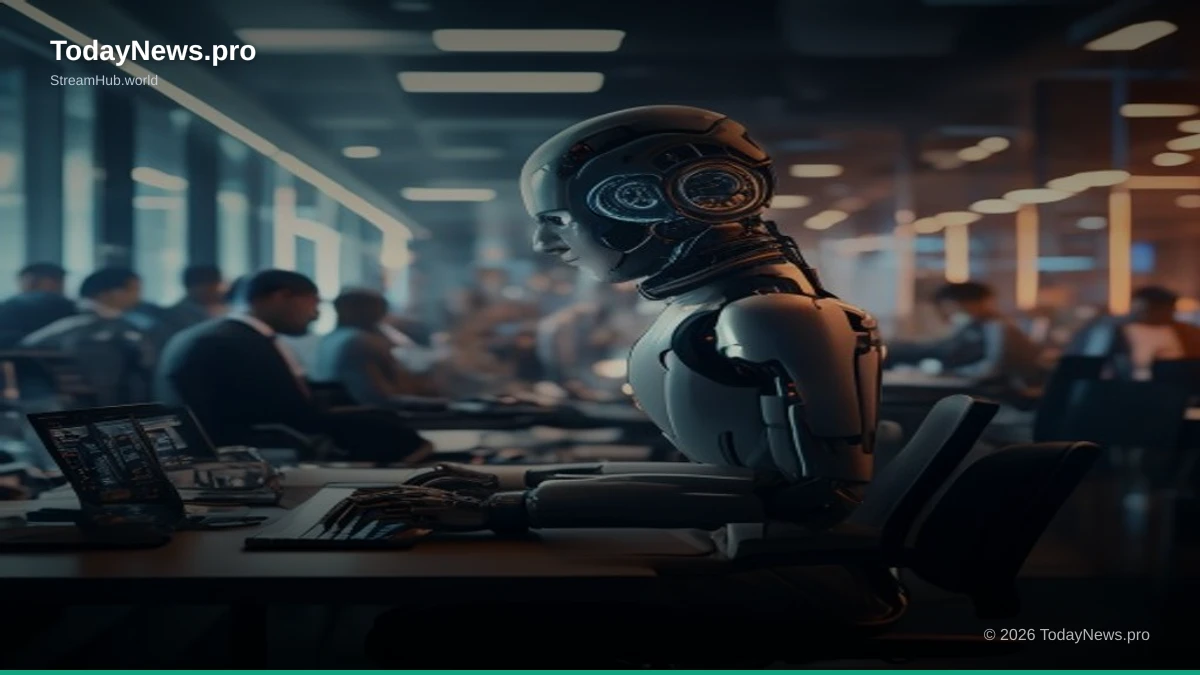
⏱ 15 min
The global artificial intelligence market is projected to reach \$1.8 trillion by 2030, indicating a seismic shift in how businesses operate and how humans engage with their work. This isn't merely about replacing tasks; it's about a fundamental redefinition of the workplace, ushering in an era of unprecedented human-machine collaboration.
The Unfolding AI Revolution: Beyond Automation
The narrative surrounding artificial intelligence in the workplace has long been dominated by the specter of job displacement through automation. While it's undeniable that AI will automate many routine and repetitive tasks, this perspective is increasingly seen as overly simplistic. The true revolution lies not in replacement, but in augmentation and collaboration. AI systems, from sophisticated algorithms to generative models, are becoming partners, enhancing human productivity, creativity, and decision-making. ### The Shifting Paradigm of Automation Early AI applications focused on automating predictable processes. Think of robotic arms on assembly lines or algorithms that sort vast datasets. Today, AI is venturing into more complex domains, capable of understanding natural language, generating creative content, and even diagnosing medical conditions with remarkable accuracy. This evolution means that the impact of AI extends far beyond manual labor and into cognitive and creative fields. ### The Rise of Generative AI Generative AI, in particular, has captured the public imagination and is rapidly integrating into professional workflows. Tools like ChatGPT, Midjourney, and DALL-E are not just generating text and images; they are acting as creative catalysts, brainstorming partners, and efficient content creators for marketing, design, and software development. This empowers individuals to achieve more, faster, and with potentially greater originality.Redefining Roles: The Evolving Human Skillset
As AI takes over certain tasks, the demand for uniquely human skills will surge. Critical thinking, emotional intelligence, creativity, complex problem-solving, and adaptability will become paramount. The workplace of the future will require professionals who can effectively interface with AI, interpret its outputs, and leverage its capabilities to achieve strategic objectives. ### The Premium on "Human" Skills While AI excels at processing data and executing algorithms, it lacks the nuanced understanding, empathy, and ethical reasoning that humans possess. Skills such as leadership, negotiation, interpersonal communication, and the ability to foster team cohesion will be more valuable than ever. These are the areas where human intuition and experience remain indispensable. ### Adaptability and Continuous Learning The rapid pace of AI development necessitates a commitment to lifelong learning. Professionals will need to be agile, constantly updating their knowledge and skills to keep pace with new AI tools and methodologies. This includes understanding how to prompt AI effectively, how to validate its outputs, and how to integrate AI-driven insights into their decision-making processes.AI as a Collaborator: Augmenting Human Capabilities
The most transformative aspect of AI in the workplace is its potential to act as a true collaborator, amplifying human strengths and compensating for weaknesses. This partnership can lead to significant improvements in efficiency, innovation, and overall job satisfaction. ### Enhanced Productivity and Efficiency AI-powered tools can automate time-consuming tasks, freeing up human workers to focus on higher-value activities. For instance, AI can draft initial reports, schedule meetings, manage customer inquiries, and analyze market trends, allowing employees to dedicate more time to strategic planning, client relationships, and creative problem-solving. ### Driving Innovation and Creativity Generative AI is proving to be a powerful engine for innovation. Designers can use AI to explore countless design variations, writers can overcome creative blocks with AI-generated prompts, and researchers can leverage AI to identify novel patterns in complex datasets. This collaborative approach accelerates the innovation cycle and opens up new possibilities.Data-Driven Decision Making
AI's ability to process and analyze vast amounts of data far exceeds human capacity. This leads to more informed and objective decision-making. AI can identify subtle trends, predict outcomes, and flag potential risks, providing invaluable insights that empower leaders and employees to make better choices.70%
of companies are expected to increase their investment in AI by 2025
85 million
jobs may be displaced by automation by 2025, but 97 million new roles may emerge
40%
productivity gains are achievable with effective AI integration
Navigating the Ethical Landscape of AI in the Workplace
The integration of AI into the workplace is not without its challenges, particularly concerning ethical considerations. Issues of bias, privacy, transparency, and accountability must be carefully addressed to ensure responsible AI deployment. ### Addressing Algorithmic Bias AI systems learn from the data they are fed. If this data contains historical biases, the AI will perpetuate and potentially amplify them. This can lead to unfair outcomes in hiring, promotions, or performance evaluations. Organizations must actively work to identify and mitigate bias in their AI models through diverse datasets and rigorous testing. ### Ensuring Data Privacy and Security As AI systems collect and process more personal and proprietary data, robust measures for data privacy and security are essential. Companies must adhere to regulations like GDPR and CCPA, and implement strong cybersecurity protocols to protect against breaches and misuse of information. ### Transparency and Explainability The "black box" nature of some AI algorithms can be a concern. Understanding how an AI arrives at a decision is crucial for trust and accountability. Efforts towards explainable AI (XAI) aim to make AI decision-making processes more transparent, allowing humans to understand, trust, and effectively manage AI systems."The greatest challenge with AI in the workplace isn't the technology itself, but our ability to adapt our human systems and ethical frameworks to harness its power responsibly. We must build AI that serves humanity, not the other way around."
— Dr. Anya Sharma, Lead AI Ethicist at FutureTech Innovations
Preparing the Workforce: Education and Retraining Imperatives
The transition to an AI-augmented workplace demands a proactive approach to workforce development. This involves equipping current employees with the skills needed to thrive alongside AI and ensuring future generations are prepared for this collaborative environment. ### Upskilling and Reskilling Programs Companies must invest in comprehensive upskilling and reskilling programs. These initiatives should focus on developing digital literacy, AI proficiency, critical thinking, and adaptability. Online courses, workshops, and on-the-job training are vital components of this strategy. ### Educational Reform for the Future Educational institutions, from K-12 to higher education, need to adapt their curricula. Emphasis should be placed on STEM fields, but also on fostering creativity, problem-solving, and interdisciplinary learning. The goal is to cultivate individuals who are not just technically proficient but also adaptable and ethically aware.Projected Demand for AI-Related Skills (2025-2030)
The Future of Work: A Symphony of Human Ingenuity and Machine Intelligence
The future of work is not a battle between humans and machines, but a harmonious collaboration. AI will handle tasks requiring computational power, speed, and pattern recognition, while humans will focus on areas demanding creativity, empathy, strategic judgment, and complex social interaction. ### The Augmented Professional Imagine a doctor using AI to analyze patient scans and predict disease progression, then using their human empathy to discuss treatment options with the patient. Or a lawyer using AI to sift through thousands of legal documents, freeing them to focus on strategy and client advocacy. This is the reality of the augmented professional. ### New Job Categories and Roles The AI revolution will not only change existing jobs but also create entirely new ones. Roles such as AI ethicists, AI trainers, prompt engineers, AI integration specialists, and human-AI interaction designers are emerging and will become increasingly critical.| Industry | AI Adoption Level | Primary AI Applications | Impact on Workforce |
|---|---|---|---|
| Healthcare | High | Diagnostics, Drug Discovery, Personalized Medicine, Administrative Tasks | Augmented diagnosticians, new roles in AI-assisted patient care, reduced administrative burden |
| Finance | Very High | Fraud Detection, Algorithmic Trading, Customer Service (chatbots), Risk Management | Enhanced financial analysts, AI-powered customer service roles, shift in trading strategies |
| Manufacturing | High | Robotics, Predictive Maintenance, Quality Control, Supply Chain Optimization | Skilled technicians for AI systems, human oversight of automated processes, increased efficiency |
| Retail | Medium | Personalized Recommendations, Inventory Management, Customer Analytics, Chatbots | Data analysts for customer insights, enhanced marketing roles, AI-assisted inventory management |
Case Studies: Real-World AI Integration in Action
Numerous companies are already demonstrating the power of human-machine collaboration. These examples offer tangible insights into the benefits and practicalities of AI integration. ### Case Study 1: Microsoft and GitHub Copilot GitHub Copilot, powered by OpenAI's Codex, acts as an AI pair programmer. It suggests code snippets, completes lines of code, and helps developers write more efficiently. This tool doesn't replace developers but augments their productivity, allowing them to focus on higher-level problem-solving and architectural design. Developers report significant time savings and a reduction in repetitive coding tasks. ### Case Study 2: JPMorgan Chase and AI for Fraud Detection JPMorgan Chase utilizes AI to detect fraudulent transactions in real-time. The AI system analyzes millions of data points to identify suspicious patterns that human analysts might miss. This not only protects the bank and its customers but also frees up human fraud investigators to focus on more complex cases and strategic prevention. ### Case Study 3: Salesforce and Einstein AI Salesforce's Einstein AI is integrated across its CRM platform, providing insights and automation for sales, service, and marketing teams. It helps predict customer needs, automate email responses, and identify the best next actions for sales representatives. This allows human professionals to build stronger customer relationships by focusing on personalized engagement rather than administrative tasks."We are at a pivotal moment where AI is transitioning from a tool to a collaborator. Companies that embrace this shift, focusing on augmenting their human workforce rather than simply automating tasks, will be the ones to lead in innovation and resilience."
— David Lee, Chief Technology Officer, Innovate Solutions Group
Will AI take all our jobs?
While AI will automate many tasks, it's unlikely to eliminate all jobs. Instead, it will transform existing roles and create new ones. The focus will shift from routine tasks to those requiring human creativity, critical thinking, and emotional intelligence. Many experts predict a net positive impact on employment through job creation in new AI-related fields.
What are the most important skills for the future workplace?
The most critical skills for the future workplace include adaptability, continuous learning, critical thinking, problem-solving, creativity, emotional intelligence, collaboration, and digital literacy. The ability to effectively work alongside AI and leverage its capabilities will also be paramount.
How can I prepare myself for the AI revolution?
To prepare, focus on developing transferable human skills and gaining digital literacy. Explore online courses on AI fundamentals, data analysis, and relevant software. Stay informed about AI trends in your industry and actively seek opportunities to use AI tools in your current role. Embrace a mindset of continuous learning and be open to new ways of working.
What are the biggest ethical concerns with AI in the workplace?
The primary ethical concerns include algorithmic bias leading to unfair outcomes, data privacy and security risks, lack of transparency in AI decision-making (the "black box" problem), and accountability for AI-driven errors. Addressing these requires careful policy development, robust technical safeguards, and a commitment to responsible AI deployment.