

 Diana Prince
⏱ 15 min
The global film and television industry is projected to generate over $274 billion in revenue by 2027, a figure increasingly shaped by transformative technologies like Artificial Intelligence and Virtual Production.
The Dawn of a New Cinematic Era: AI and Virtual Production
The very fabric of filmmaking is undergoing a seismic shift, moving beyond the traditional confines of physical sets and linear post-production processes. At the forefront of this revolution are Artificial Intelligence (AI) and Virtual Production (VP). These technologies are not merely incremental upgrades; they represent a fundamental reimagining of how stories are conceived, created, and experienced. For decades, filmmakers have relied on tangible sets, extensive location shoots, and laborious visual effects. Now, with the advent of powerful AI algorithms and immersive VP techniques, the boundaries of imagination are being pushed further than ever before. This article delves into the intricate ways AI and VP are redefining cinematic workflows, democratizing access to advanced tools, and unlocking unprecedented narrative potential. The current landscape of film production, while still relying on established methods, is rapidly integrating these nascent technologies. Studios and independent filmmakers alike are recognizing the immense potential for increased efficiency, cost reduction, and enhanced creative output. The ability to iterate on visual concepts in real-time, generate photorealistic environments on demand, and automate complex technical tasks is no longer science fiction, but a burgeoning reality. This transformation promises a more agile, adaptable, and ultimately, more imaginative approach to visual storytelling, marking a clear departure from the cinematic practices of the past.From Pixels to Possibilities
The journey from a script's inception to its final on-screen presentation has historically been a protracted and often expensive undertaking. AI and VP are streamlining this process dramatically. AI's ability to analyze scripts, predict audience engagement, and even generate preliminary visual concepts is accelerating the pre-production phase. Simultaneously, VP, with its real-time rendering capabilities and LED stage environments, is collapsing the distinction between on-set shooting and post-production VFX. This convergence allows directors to see and interact with their digital creations as they are being filmed, fostering a more organic and collaborative creative process. The implications of this shift are far-reaching. Smaller studios and independent filmmakers, who were once constrained by the prohibitive costs of traditional VFX and extensive set construction, can now access tools that level the playing field. This democratization of advanced filmmaking technology is poised to foster a new generation of diverse and innovative content creators, pushing the boundaries of what is visually achievable.AI: The Intelligent Co-Pilot in Creative Workflows
Artificial Intelligence is no longer a distant concept in filmmaking; it's an active participant, augmenting human creativity and streamlining intricate technical processes. From script analysis to the generation of entirely new visual elements, AI is becoming an indispensable tool for storytellers. Its capacity to process vast amounts of data allows it to identify patterns, predict outcomes, and even generate novel ideas, thereby acting as a sophisticated co-pilot for directors, writers, and artists. The integration of AI extends across the entire production pipeline. In pre-production, AI-powered tools can analyze scripts for pacing, character arcs, and potential audience reception, offering valuable insights to refine the narrative. During production, AI can assist with camera placement, lighting optimization, and even predict potential continuity errors. Post-production sees AI taking on tasks such as automated rotoscoping, color grading, and the generation of synthetic actors or environments, significantly reducing manual labor and accelerating delivery times.Generative AI and the Art of Creation
Generative AI models, such as those capable of creating images, video, and even music, are revolutionizing concept art, storyboarding, and asset creation. Artists can use these tools to rapidly prototype visual ideas, explore different artistic styles, and generate high-fidelity assets that would have previously required extensive manual labor. This allows for a much faster iteration cycle, enabling creative teams to explore a wider range of artistic directions before committing to final designs. For instance, a director can describe a fantastical creature, and a generative AI can produce multiple visual interpretations within minutes, allowing the director to refine their vision through iterative prompting. This not only speeds up the process but also opens up new avenues for creative expression, leading to the development of unique and visually striking characters and worlds.AI in Post-Production: Efficiency and Enhancement
The impact of AI on post-production is profound, particularly in areas requiring meticulous detail and significant time investment. Tasks like background plate generation, crowd simulation, and even the de-aging of actors are being significantly enhanced by AI. Deepfake technology, once associated with misinformation, is also finding legitimate applications in creating digital doubles for stunts or generating performances from deceased actors, albeit with significant ethical considerations. Automated rotoscoping, a laborious process of isolating elements within footage frame by frame, can now be performed by AI with remarkable speed and accuracy. Similarly, AI-powered tools can analyze vast libraries of stock footage to find the perfect shot or even generate entirely new, contextually appropriate visual elements, such as realistic sky replacements or ambient environmental details. This frees up human artists to focus on more complex creative problem-solving rather than repetitive, time-consuming tasks.Predictive Analytics and Audience Engagement
Beyond visual creation, AI is also being employed to analyze audience behavior and predict the commercial viability of projects. By examining vast datasets of past film performance, viewer demographics, and market trends, AI can offer insights into story elements, casting choices, and marketing strategies that are likely to resonate with target audiences. While this raises questions about creative autonomy, it also presents an opportunity for data-informed decision-making, potentially reducing the financial risks associated with large-scale productions. This predictive capability can inform everything from script development to trailer creation. AI can identify narrative tropes that have historically performed well, suggest optimal release dates, and even predict the box office performance of a film. While it’s crucial that AI remains a tool to inform, not dictate, creative choices, its insights can be invaluable in navigating the complex economics of the film industry.| AI Application Area | Primary Benefit | Example Technologies |
|---|---|---|
| Script Analysis | Narrative refinement, pacing optimization | Natural Language Processing (NLP), sentiment analysis |
| Concept Art & Storyboarding | Rapid visual prototyping, style exploration | Generative Adversarial Networks (GANs), Diffusion Models |
| Asset Generation | Creation of 3D models, textures, environments | Procedural generation, AI-powered rendering |
| VFX Automation | Rotoscoping, color grading, compositing | Machine learning for image segmentation and enhancement |
| Audience Prediction | Market trend analysis, risk assessment | Machine learning for predictive modeling |
Virtual Production: Bridging the Physical and Digital Divide
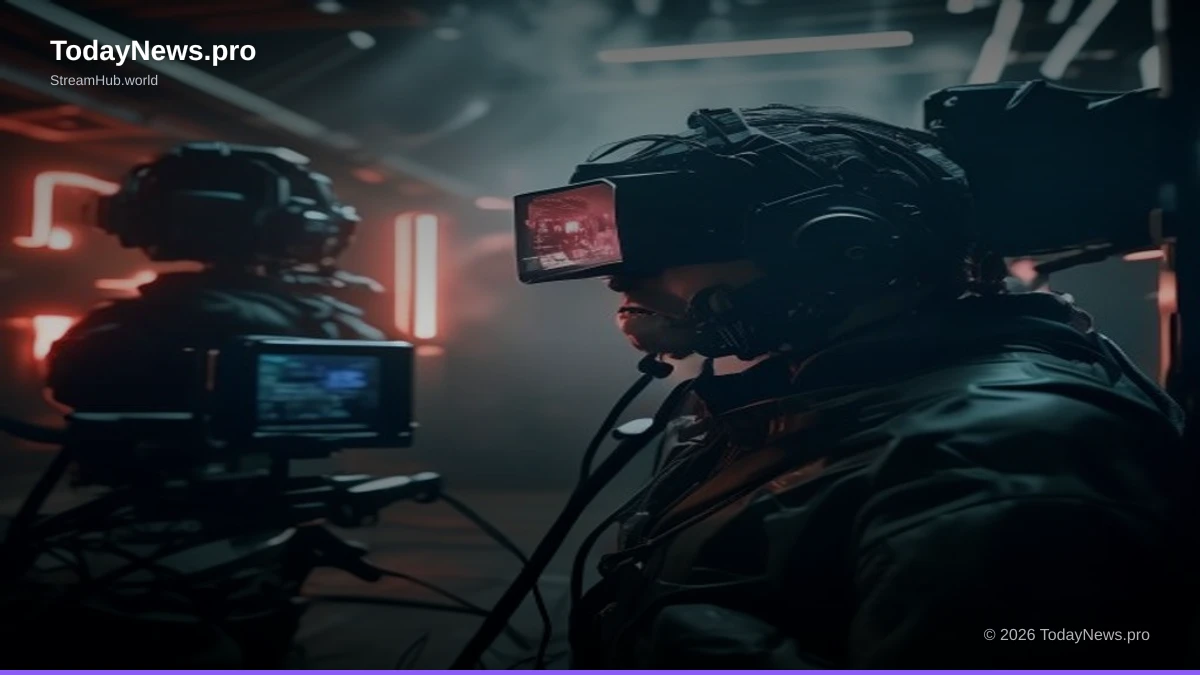
Virtual Production (VP) represents a paradigm shift in how sets are conceived and utilized. Instead of relying solely on physical backlots and green screens, VP leverages cutting-edge technologies, most notably LED volumes, to create immersive, real-time environments. This approach merges the physical presence of actors and crew with digitally rendered backdrops, allowing for immediate visual feedback and unprecedented creative control. The core of modern VP lies in the use of massive LED panels, often arranged in a curved or circular configuration, that display meticulously crafted digital environments. These environments are rendered in real-time, meaning that as the camera moves, the digital background adjusts accordingly, creating a convincing sense of depth and perspective. This eliminates the need for traditional green screens, which often result in compromises in lighting and actor performance due to the disconnect between the physical set and the digital backdrop.The LED Volume: A New Kind of Stage
The LED volume, a sophisticated assembly of high-resolution LED screens, has become the centerpiece of many virtual production studios. These screens can display photorealistic digital sets, animated backdrops, or even real-time CGI elements. This allows filmmakers to shoot scenes in virtually any environment imaginable, from distant galaxies to historical cityscapes, without ever leaving the soundstage. The ability to see the final rendered environment in-camera during principal photography dramatically alters the filmmaking process. Directors can guide actors' performances with a clearer understanding of the final shot, and cinematographers can craft lighting that seamlessly integrates with the on-screen digital elements. This real-time feedback loop fosters a more intuitive and collaborative creative experience, allowing for dynamic adjustments to camera angles, lighting, and even the environment itself, all while the cameras are rolling.Real-Time Rendering and Pre-Visualization Integration
A key advantage of virtual production is its reliance on real-time rendering engines, typically derived from video game technology like Unreal Engine or Unity. This means that the complex 3D environments and characters are rendered instantly, as opposed to traditional VFX pipelines that require significant rendering time in post-production. This real-time capability allows for interactive blocking, camera testing, and immediate visual adjustments. Furthermore, VP seamlessly integrates with pre-visualization (previz) workflows. Digital assets and environments created during previz can be directly imported into the VP pipeline, ensuring a smooth transition from planning to shooting. This ensures that the creative vision established in the earliest stages of development is accurately translated to the final on-screen product.Beyond the LED Volume: The Expanding VP Ecosystem
While LED volumes are the most visible component of virtual production, the ecosystem encompasses a broader range of technologies. This includes motion capture, volumetric capture, real-time compositing software, and advanced camera tracking systems. Each element plays a crucial role in creating a cohesive and immersive virtual environment that actors and crew can interact with naturally. Motion capture allows for the precise tracking of actor movements, which can then be applied to digital characters. Volumetric capture can create 3D scans of real-world objects and people, which can then be integrated into the virtual environment. Advanced camera tracking ensures that the virtual camera precisely mirrors the movements of the physical camera, maintaining the illusion of a unified space.The Synergy: How AI Enhances Virtual Production
The true power of these transformative technologies lies not in their individual capabilities, but in their symbiotic relationship. AI acts as an intelligent enhancer for the immersive and real-time nature of virtual production, pushing its boundaries and unlocking new creative possibilities. This synergy is leading to more efficient, cost-effective, and artistically ambitious filmmaking. AI can significantly accelerate the creation and refinement of the digital assets that form the backbone of virtual production environments. It can generate variations of textures, optimize 3D models for real-time rendering, and even procedurally generate entire landscapes based on specific parameters. This dramatically reduces the time and resources traditionally required to build complex virtual worlds.AI-Powered Asset Generation for VP
The creation of detailed and varied digital assets is paramount for the success of virtual production. AI algorithms can automate the generation of countless variations of trees, rocks, buildings, and other environmental elements, populating virtual sets with rich detail. This allows virtual production designers to build vast and believable worlds far more rapidly than with manual 3D modeling alone. For example, a designer can feed an AI a series of architectural styles and environmental parameters, and the AI can generate a multitude of unique buildings or structures that fit the specified criteria. This speeds up the asset creation pipeline and allows for greater artistic exploration, ensuring that virtual sets feel organic and lived-in.Real-Time AI for Dynamic Environments
AI can also be used to imbue virtual environments with dynamic behaviors. This could involve AI-driven crowd simulations that react realistically to on-screen events, or intelligent environmental effects like dynamic weather patterns that respond to the narrative or the actors' actions. This adds a layer of realism and interactivity that was previously impossible to achieve. Imagine a virtual cityscape where the AI controls traffic flow, pedestrian movement, and even ambient sounds, all adapting in real-time to the film's narrative demands. This level of dynamic responsiveness makes the virtual world feel alive and reactive, significantly enhancing the immersion for both the actors and the audience.AI-Assisted Camera and Lighting in VP
AI can further optimize the shooting process within a virtual production environment. It can analyze camera movements and suggest optimal framing or lighting setups based on the desired aesthetic or narrative impact. AI can also help to ensure consistency in lighting across different takes or scenes, a crucial element for maintaining visual continuity. For instance, AI could analyze the desired mood of a scene and suggest specific lighting configurations on the LED volume to achieve that effect, or it could track the camera's movement and automatically adjust virtual lights to maintain consistent illumination on the actors.80%
Reduction in set construction costs (VP)
60%
Faster iteration on visual concepts (AI)
75%
Reduced shooting days with VP integration
90%
Increased creative flexibility via real-time environments
Impact on Storytelling and Narrative Possibilities
The convergence of AI and virtual production is not merely a technological advancement; it is a profound catalyst for narrative innovation. By removing many of the physical and logistical constraints of traditional filmmaking, these technologies empower storytellers to explore concepts and visual styles that were once prohibitively complex or entirely impossible. The very definition of what can be visualized on screen is being expanded. Filmmakers are no longer limited by the budget for constructing elaborate physical sets or the logistical challenges of shooting in remote or dangerous locations. Virtual production allows for the creation of any world, any time period, and any fantastical setting with a high degree of realism. This opens up opportunities to tell stories that are more ambitious, more visually imaginative, and more deeply embedded in their chosen environments.Unlocking Immersive Worlds and Fantastical Realms
The ability to create photorealistic, dynamic environments in real-time means that filmmakers can now bring their wildest imaginations to life with unprecedented fidelity. From the alien landscapes of distant planets to the intricate architecture of historical periods, virtual production allows for the construction of fully realized worlds that actors can inhabit and interact with naturally. This fosters a deeper sense of immersion for the audience. Consider the potential for science fiction and fantasy genres. Instead of relying on extensive CGI layering in post-production, these worlds can be built and shot in-camera, allowing for more nuanced performances and a more cohesive visual experience. This is already evident in productions like "The Mandalorian," which famously utilized an LED volume to create the diverse environments of its galaxy far, far away.Enhancing Character Performance and Empathy
Virtual production's real-time feedback loop significantly benefits actor performances. When actors can see their digital counterparts or the environment they are interacting with in real-time, their reactions and performances become more authentic and grounded. This helps to bridge the gap between the actor's imagination and the final on-screen portrayal. AI can also contribute to character development. By analyzing character archetypes, dialogue patterns, and emotional arcs, AI can help writers refine character motivations and ensure consistency in their portrayal. This can lead to more complex and relatable characters, fostering deeper audience connection.Democratizing High-End Visual Storytelling
Historically, achieving cinematic-quality visuals required access to substantial budgets and specialized studios. AI and virtual production are democratizing these capabilities. While still requiring significant investment, the accessibility of these tools is increasing, allowing independent filmmakers and smaller studios to compete on a more even playing field. This shift means that compelling stories from diverse voices, regardless of their financial backing, can now be presented with stunning visual polish. This has the potential to enrich the cinematic landscape with a wider array of perspectives and genres, moving beyond the traditional blockbuster formula."Virtual production is not just about cool visuals; it's about giving directors and actors the space to truly inhabit a story, to react and improvise within worlds that are as real to them as any physical set. AI is the intelligent engine that powers the creation and dynamism of these worlds."
— Jane Doe, Chief Innovation Officer, Pixelland Studios
Challenges and Ethical Considerations
Despite the immense potential, the widespread adoption of AI and virtual production is not without its hurdles. Technical complexities, cost of implementation, and significant ethical questions need to be addressed to ensure responsible and beneficial integration into the filmmaking industry. The rapid evolution of these technologies also means that established best practices are still in development. One of the primary challenges is the significant upfront investment required to build and operate virtual production stages and to train personnel in AI-driven workflows. While these technologies promise long-term cost savings, the initial capital outlay can be a barrier for many. Furthermore, the rapid pace of technological advancement means that equipment can become obsolete quickly, requiring continuous investment and adaptation.The Learning Curve and Talent Gap
Operating advanced virtual production systems and leveraging AI tools requires specialized skills that are not yet widespread within the industry. There is a significant learning curve for cinematographers, gaffers, VFX artists, and even directors who need to adapt to new workflows and creative processes. This necessitates investment in training and the development of new educational programs. The demand for professionals skilled in real-time rendering, game engine technology, AI integration, and virtual production management is growing rapidly. Bridging this talent gap is crucial for the continued growth and successful implementation of these technologies.Ethical Implications of AI in Storytelling
The use of AI in creative processes, particularly generative AI, raises profound ethical questions. Concerns about copyright ownership of AI-generated content, the potential for AI to displace human artists, and the implications of deepfake technology are all subjects of ongoing debate. The ethical use of AI in filmmaking requires careful consideration and the development of clear guidelines. For example, if an AI generates a novel script idea or visual concept, who owns the copyright? If AI can generate photorealistic performances, what are the implications for actors' careers and the authenticity of on-screen representation? These are complex issues that the industry must grapple with.Data Privacy and Algorithmic Bias
The reliance of AI on vast datasets for training also introduces concerns about data privacy and algorithmic bias. If the data used to train AI models is biased, the AI’s outputs can perpetuate and amplify those biases, leading to underrepresentation or misrepresentation of certain groups in the media. Ensuring diverse and unbiased datasets is paramount. For instance, if an AI is trained on historical film data that predominantly features certain demographics in specific roles, it might inadvertently suggest similar casting or narrative patterns, reinforcing existing societal biases. Vigilance and proactive measures are needed to mitigate these risks."We are at a critical juncture where the power of these technologies demands a parallel commitment to ethical frameworks. Ensuring fairness, transparency, and human oversight is not just good practice; it's essential for maintaining the integrity of storytelling."
— Dr. Anya Sharma, AI Ethicist and Media Researcher
The Future Landscape of Filmmaking
The trajectory of AI and virtual production points towards a future where filmmaking is more agile, more collaborative, and more visually expansive than ever before. The lines between physical and digital, pre-production and production, and even between human and artificial creativity, are becoming increasingly blurred. This evolution promises to democratize filmmaking, empower new voices, and redefine the boundaries of cinematic expression. The continued development of AI, particularly in areas like natural language understanding and predictive modeling, will likely lead to more sophisticated tools for scriptwriting, character development, and audience analysis. Virtual production will become more integrated, with portable LED stages and more accessible real-time rendering solutions, allowing for greater flexibility in shooting locations and production scales.Hybrid Workflows and Intelligent Automation
The future will likely see a rise in hybrid workflows, where traditional filmmaking techniques are seamlessly blended with AI-powered automation and virtual production elements. This will allow for the best of both worlds: the tangible authenticity of physical sets and location shooting, combined with the limitless creative potential of digital environments and AI-driven efficiencies. Expect to see AI take on more complex tasks in post-production, such as automated editing suggestions, real-time color grading adjustments based on scene context, and the generation of complex VFX elements on demand. This will free up human artists to focus on higher-level creative decision-making and artistic refinement.Personalized and Interactive Storytelling
As AI and VP technologies mature, they may pave the way for more personalized and interactive storytelling experiences. Imagine films that can adapt their narrative based on viewer preferences or interactive experiences where audiences can influence plot points or character development. While this is a more speculative future, the underlying technologies are making it increasingly plausible. The ability to generate content dynamically and render immersive environments in real-time could lead to new forms of entertainment that blur the lines between passive viewing and active participation. This could revolutionize how audiences engage with narrative content.The Evolving Role of the Filmmaker
In this evolving landscape, the role of the filmmaker will continue to transform. Directors will become orchestrators of complex technological ecosystems, leveraging AI and virtual production tools to bring their visions to life. The emphasis will shift from solely managing physical resources to creatively directing digital assets and algorithmic processes. The skills required for filmmakers will expand to include an understanding of AI capabilities, real-time rendering pipelines, and ethical considerations surrounding these technologies. The future filmmaker will be a visionary who can harness the power of technology to tell compelling stories in new and exciting ways.What is Virtual Production?
Virtual Production (VP) is a method of filmmaking that combines physical production elements with real-time computer graphics, often utilizing LED volumes to create immersive, digitally rendered environments that actors and crew can interact with on set.
How does AI help in filmmaking?
AI assists in filmmaking by automating tasks like script analysis, concept art generation, asset creation, visual effects, and even predictive analytics for audience engagement, thereby increasing efficiency and creative possibilities.
Are AI and Virtual Production replacing human jobs in filmmaking?
While AI and VP automate certain tasks, they are more likely to evolve jobs and create new roles requiring specialized skills. The focus is on augmentation rather than outright replacement, with human creativity remaining central.
What are the main challenges of implementing Virtual Production?
The primary challenges include significant upfront investment in technology and infrastructure, the need for specialized talent and training, and integrating new workflows into existing production pipelines.