

 Marcus Thorne
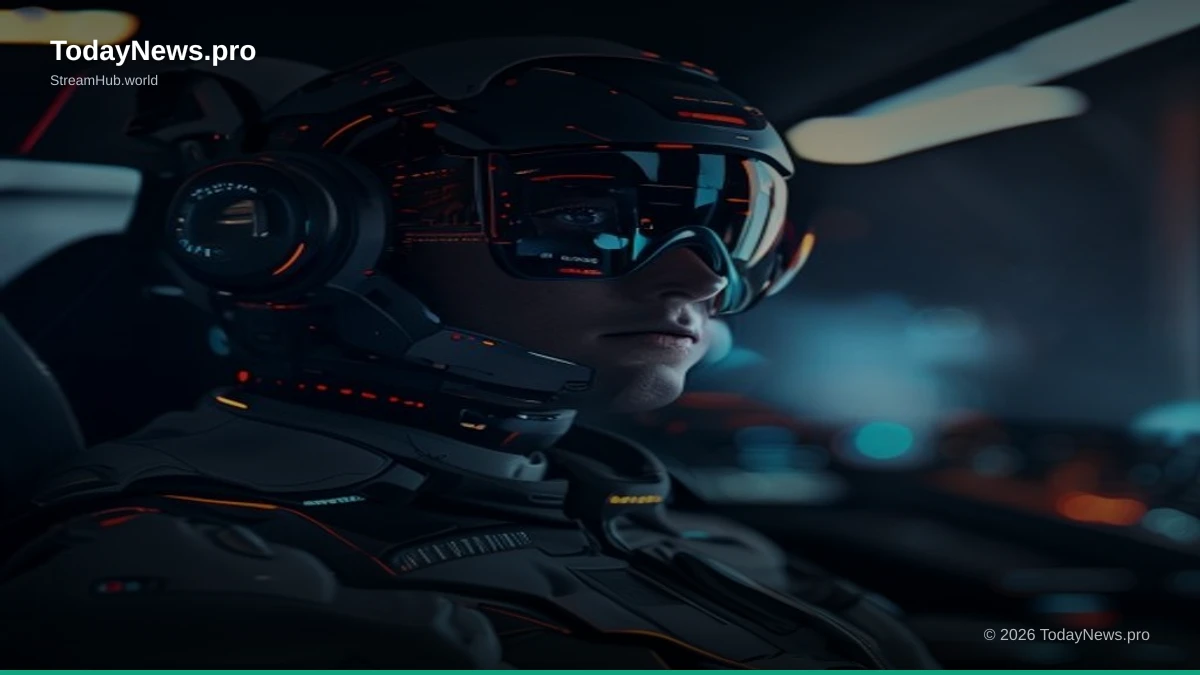
By 2030, the average individual is projected to spend up to 4 hours per day interacting with AI, a significant portion of which will be with personalized assistants, according to a report by the Global AI Institute.
The Dawn of the Personal AI Co-Pilot
We stand at the precipice of a profound shift in human-computer interaction. The era of the passive digital tool is giving way to an age of proactive, intelligent allies: personal AI co-pilots. These are not mere chatbots or voice assistants; they are sophisticated entities designed to understand, anticipate, and act on our behalf, weaving themselves seamlessly into the fabric of our daily lives. This evolution promises a future of hyper-personalized assistance and automated living, reshaping how we work, learn, and interact with the world around us.
The concept of an AI co-pilot transcends the current capabilities of virtual assistants like Siri or Alexa. While those systems excel at executing specific commands, personal AI co-pilots are envisioned as deeply integrated partners. They will learn our routines, preferences, and even our emotional states, offering tailored support that feels intuitive and indispensable. Imagine an AI that not only schedules your meetings but also analyzes the optimal time for them based on your energy levels, suggests conversation starters for attendees, and prepares relevant briefs – all before you even think to ask.
This burgeoning field is fueled by rapid advancements in machine learning, natural language processing, and sophisticated data analytics. The sheer volume of data generated daily, coupled with increasingly powerful algorithms, allows for the creation of AI systems capable of nuanced understanding and predictive action. The goal is to move from a reactive digital experience to a proactive one, where technology anticipates our needs and streamlines our tasks with uncanny precision.
Beyond Simple Voice Commands: The Evolution of Assistants
The journey from simple voice commands to sophisticated AI co-pilots has been a remarkable one. Early digital assistants were limited, akin to digital secretaries who could only follow direct instructions. They lacked context, memory, and the ability to infer intent. Think of asking your phone to "set a timer for 10 minutes" – a straightforward command, but one that required explicit instruction.
As AI technology matured, we saw the emergence of more context-aware assistants. These systems began to remember previous interactions, understand slightly more complex queries, and integrate with a wider array of applications. For example, an assistant that could "remind me to call Mom when I get home" demonstrated a nascent understanding of location and personal relationships. This was a significant leap, moving beyond mere command execution to a more personalized experience.
The current generation of AI assistants is already capable of more complex tasks, such as summarizing emails, drafting responses, and managing calendars with a degree of autonomy. However, the true co-pilot experience goes further. It involves proactive task management, personalized recommendations based on a deep understanding of your lifestyle, and even emotional intelligence to gauge your mood and adjust its communication accordingly. This is the frontier we are rapidly approaching.
Understanding Hyper-Personalization: What Makes It Different?
Hyper-personalization is the cornerstone of the personal AI co-pilot. It’s about moving beyond generic recommendations and generic assistance to an experience tailored to the individual at an unprecedented level of detail. This means understanding not just what you like, but why you like it, and how your preferences evolve over time and across different contexts.
Consider content consumption. Instead of recommending a popular movie, a hyper-personalized AI co-pilot would analyze your viewing history, your stated preferences, the time of day, your current mood (inferred through interaction patterns or even biometric data), and even the company you're with (if it has access to that information) to suggest a film that is most likely to resonate with you at that precise moment. This level of granularity is what differentiates it from mass-market personalization.
This deep personalization is powered by vast datasets of user behavior, preferences, and contextual information. Machine learning algorithms then process this data to build a dynamic, evolving profile of the individual. This profile allows the AI to anticipate needs, proactively offer solutions, and communicate in a manner that is most effective for that specific person. It’s about creating an AI that truly "gets" you.
The Pillars of Automated Living: Efficiency and Convenience
The promise of personal AI co-pilots extends to the realm of automated living, where technology takes on a significant portion of our daily chores and decision-making processes, freeing up human capital for more creative and meaningful pursuits. This is built upon two primary pillars: efficiency and convenience.
Efficiency is about optimizing our time and resources. An AI co-pilot can manage your finances, suggesting optimal investment strategies, automating bill payments, and tracking expenses with unparalleled accuracy. In the workplace, it can automate report generation, schedule meetings intelligently, and even draft initial responses to client inquiries, significantly reducing the administrative burden on professionals.
Convenience, on the other hand, is about simplifying our lives. Imagine an AI that manages your smart home ecosystem, adjusting lighting and temperature based on your presence and preferences, ordering groceries when supplies run low, and even planning meals based on your dietary needs and available ingredients. This seamless integration of technology into our living spaces creates an environment that is both intelligent and effortless to navigate.
| Task Category | Current Time Spent (Avg. per week) | Projected Time Saved with AI Co-Pilot | Percentage Saved |
|---|---|---|---|
| Personal Finance Management | 3.5 hours | 2.8 hours | 80% |
| Scheduling and Calendar Management | 2.0 hours | 1.5 hours | 75% |
| Grocery Shopping and Meal Planning | 4.0 hours | 3.0 hours | 75% |
| Information Gathering and Research | 6.0 hours | 4.0 hours | 67% |
| Home Maintenance and Management | 2.5 hours | 2.0 hours | 80% |
The Ethical Labyrinth: Privacy, Security, and Bias
As we embrace the convenience and efficiency offered by personal AI co-pilots, it is imperative to address the significant ethical challenges that accompany this technological revolution. The depth of data required for hyper-personalization raises profound questions about privacy. What happens to the vast troves of personal information collected by these AI systems? How is it stored, used, and protected?
The security of this data is paramount. A compromised AI co-pilot could expose sensitive personal details, financial information, and even intimate communication logs. Robust encryption, secure data storage protocols, and stringent access controls are not just desirable; they are essential safeguards against malicious actors. The potential for misuse, from targeted disinformation campaigns to identity theft, necessitates a proactive and vigilant approach to AI security.
Bias within AI algorithms is another critical concern. If the data used to train these co-pilots reflects societal biases, the AI itself will perpetuate and potentially amplify them. This can manifest in discriminatory recommendations, unfair treatment, or skewed decision-making. Ensuring fairness and equity in AI development requires diverse datasets, rigorous testing for bias, and continuous monitoring and correction mechanisms. The pursuit of a truly helpful AI must be coupled with a commitment to ethical development and deployment.
The Future Unfolds: What to Expect Next
The trajectory of personal AI co-pilots suggests a future where human capabilities are significantly augmented. We can anticipate AI systems that not only manage our schedules but also actively participate in creative processes, offering insights and suggestions for artistic endeavors, writing projects, or problem-solving challenges.
The integration of AI with augmented reality (AR) and virtual reality (VR) will further blur the lines between the digital and physical worlds. Imagine an AI co-pilot that guides you through complex surgical procedures in VR, or provides real-time contextual information overlaid on your vision through AR glasses, offering instructions, historical facts, or social cues about people you encounter.
Furthermore, the development of more sophisticated emotional intelligence in AI will allow for even deeper, more nuanced human-AI partnerships. These co-pilots could offer mental health support, act as personalized tutors adapting to individual learning styles and emotional states, or even serve as companions for the elderly, providing conversation and assistance.
Navigating the Transition: Preparing for an AI-Augmented Life
The transition to an era of hyper-personalized assistants and automated living will not be without its challenges. It requires a conscious effort from individuals, businesses, and governments to adapt and prepare. For individuals, this means cultivating digital literacy, understanding the capabilities and limitations of AI, and developing critical thinking skills to discern AI-generated information from human insight.
Education systems will need to evolve, focusing on skills that complement AI, such as creativity, critical thinking, emotional intelligence, and complex problem-solving. Lifelong learning will become more crucial than ever, as the nature of work and daily life continuously adapts to technological advancements.
Governments and regulatory bodies have a vital role to play in establishing frameworks for AI development and deployment. This includes creating robust data privacy laws, setting standards for AI security and fairness, and fostering public discourse on the ethical implications of advanced AI. Collaboration between industry, academia, and government is essential to ensure that this transition is equitable and beneficial for all.
The journey towards automated living and hyper-personalized AI co-pilots is not a distant science fiction fantasy; it is unfolding around us at an accelerating pace. By understanding its potential, its challenges, and the necessary preparations, we can collectively shape a future where technology serves as an indispensable partner, enhancing our lives in ways we are only beginning to imagine. The future of living is intelligent, personalized, and automated.