

 Marcus Thorne
⏱ 17 min
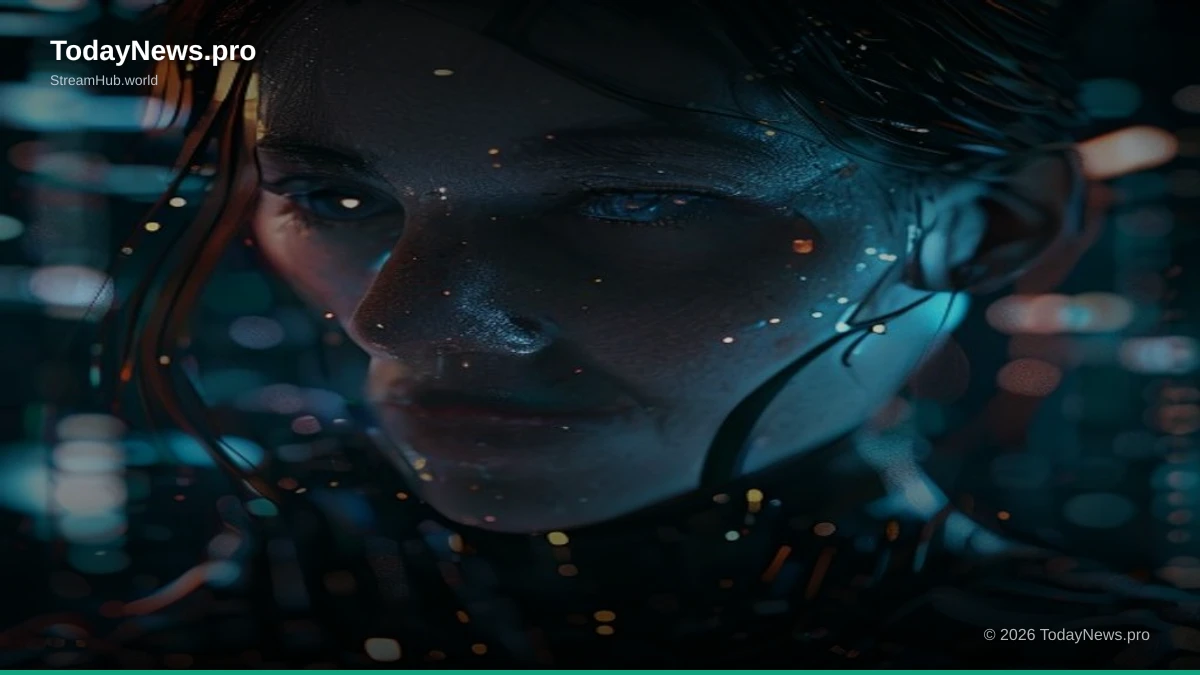
In 2023 alone, AI art generators produced an estimated 10 billion images, a staggering figure that underscores the rapid integration of artificial intelligence into the creative industries. The Algorithmic Canvas: AIs Emergence in Visual Arts
The visual arts have been perhaps the most visibly impacted by the rise of AI. Tools like Midjourney, DALL-E 2, and Stable Diffusion have transitioned from niche curiosities to widely accessible platforms, empowering individuals with no traditional artistic training to create stunning imagery. These algorithms, trained on vast datasets of existing artwork, learn patterns, styles, and aesthetics. Users provide text prompts, often intricate descriptions of desired scenes, moods, or artistic movements, and the AI synthesizes novel visuals based on its learned associations.Generative Adversarial Networks (GANs) and Diffusion Models
The technical underpinnings of these AI art generators are complex, but two primary architectures have driven their success: Generative Adversarial Networks (GANs) and diffusion models. GANs, introduced in 2014, involve two neural networks – a generator and a discriminator – locked in a competitive game. The generator creates synthetic data (images), and the discriminator tries to distinguish between real and fake data. Through this adversarial process, the generator becomes increasingly adept at producing realistic outputs. Diffusion models, a more recent breakthrough, work by gradually adding noise to an image until it becomes pure static, and then learning to reverse this process to generate a clean image from noise, guided by the input prompt. This has led to unprecedented levels of detail and coherence in AI-generated visuals.Impact on Traditional Art Forms
The accessibility of AI art has sparked debate about its impact on traditional artistic practices. While some artists view AI as a powerful new tool for ideation and augmentation, others express concern about the potential devaluation of human skill and originality. Galleries and exhibitions are beginning to feature AI-generated art, blurring the lines between human and machine creativity. This shift necessitates a re-evaluation of what constitutes "art" and the role of the artist in a technologically advanced world.Case Study: AI in Illustration and Concept Art
For industries like illustration and concept art, AI offers significant advantages in terms of speed and iteration. Concept artists can use AI to rapidly generate multiple visual ideas for characters, environments, and props, accelerating the pre-production phase of film, gaming, and animation projects. A prompt like "a steampunk dragon perched on a clockwork mountain, epic fantasy, cinematic lighting" can yield a dozen distinct concepts in minutes, a process that would have taken days or weeks manually.Harmonizing Bytes: The Evolution of AI-Generated Music
The world of music is also being reshaped by artificial intelligence. AI systems are now capable of composing original melodies, harmonies, and even complete songs in a wide range of genres. Unlike visual art, where the output is immediately perceptible, AI music composition often involves a more nuanced interplay between algorithm and human curation.Algorithmic Composition Techniques
AI music generators employ various techniques, including recurrent neural networks (RNNs) and transformer models, similar to those used in language processing. These models learn the statistical relationships between musical notes, rhythms, and sonic textures from existing musical pieces. By analyzing vast libraries of music, AI can identify common chord progressions, melodic contours, and stylistic conventions. Users can then guide the AI by specifying genre, mood, tempo, instrumentation, and even providing a basic melodic motif to build upon.AI as a Collaborative Partner for Musicians
Many musicians are embracing AI not as a replacement, but as a collaborative partner. AI tools can help overcome creative blocks by generating new melodic ideas or exploring different harmonic variations. For instance, an AI might suggest a counter-melody to a composer's existing piece, or generate backing tracks that fit a specific mood. This allows musicians to focus on higher-level creative decisions, refining and shaping the AI's output.The Market for AI-Composed Music
The market for AI-composed music is growing, particularly in areas like background music for videos, podcasts, and games. Companies are developing platforms that offer royalty-free AI-generated music tailored to specific project needs. This democratizes access to professional-sounding music, making it more affordable for independent creators and small businesses. However, questions arise regarding copyright and ownership when AI is the primary composer.| Platform | Primary Function | Genre Range | Customization Options | Target User |
|---|---|---|---|---|
| Amper Music | AI composition for media | Extensive | Mood, genre, instrumentation | Content creators, filmmakers |
| AIVA (Artificial Intelligence Virtual Artist) | Classical, cinematic, electronic music composer | Broad (specializes in classical) | Style, mood, length, instrumentation | Composers, game developers |
| Jukebox (OpenAI) | Generates music with singing in various styles | Broad | Artist, genre, lyrics | Researchers, advanced users |
| Soundraw | Royalty-free AI music creation | Extensive | Mood, genre, tempo, instruments | Content creators, marketers |
Narrative Architects: AIs Foray into Literature
While perhaps less immediately striking than visual art or music, AI's impact on literature is profound and rapidly evolving. Large language models (LLMs) like GPT-3 and its successors have demonstrated an astonishing ability to generate coherent, contextually relevant, and stylistically diverse text. This opens up new avenues for creative writing, content generation, and even literary analysis.AI in Content Creation and Journalism
The most prominent application of AI in literature is currently in content creation. LLMs can draft articles, generate marketing copy, write social media posts, and even summarize lengthy documents. For news organizations like TodayNews.pro, AI can assist in drafting initial reports based on data feeds, freeing up journalists to focus on investigative depth, interviews, and nuanced analysis. The ability to generate multiple versions of a piece quickly allows for A/B testing of headlines or content approaches.Exploring New Literary Forms
Beyond functional content, AI is being used to explore new literary forms. AI can co-author novels, generate poetry, or even create interactive narratives where the story adapts based on reader input processed by the AI. The generative nature of LLMs allows for the creation of endless variations of a story, exploring different plotlines, character arcs, and endings. This has the potential to revolutionize how stories are told and experienced.AI for Literary Analysis and Understanding
Conversely, AI can also be a powerful tool for literary analysis. LLMs can be trained to identify stylistic patterns, thematic elements, and authorial voice across large bodies of text. This can aid scholars in their research, helping to uncover connections and influences that might be missed by human readers. Analyzing vast literary corpora can reveal trends in language use, narrative structures, and thematic evolution over time.85%
of content marketers expect to use AI for content creation in the next two years.
70%
of musicians surveyed are open to using AI tools in their creative process.
200,000+
AI-generated images were sold on major art marketplaces in 2023.
The Creative Process Reimagined: Collaboration or Competition?
The integration of AI into artistic workflows inevitably raises questions about the nature of creativity itself. Is AI a tool that enhances human artistic expression, or is it a nascent competitor capable of independent creation? The reality, at this stage, leans heavily towards collaboration.AI as a Creative Assistant
For many artists, musicians, and writers, AI functions as an incredibly powerful creative assistant. It can serve as a brainstorming partner, a rapid prototyping tool, or a generator of raw material that the human artist then refines, curates, and imbues with personal meaning. A painter might use AI to generate background textures or explore color palettes before applying paint to canvas. A musician might use AI to generate rhythmic patterns or harmonic progressions to spark new song ideas. A writer might use AI to draft dialogue or plot points, which they then edit and humanize.The Human Element: Intent, Emotion, and Context
While AI can mimic styles and generate technically proficient outputs, it currently lacks genuine consciousness, intentionality, or lived emotional experience. The spark of original human insight, the nuanced expression of complex emotions, and the ability to imbue art with deep cultural and personal context remain uniquely human domains. The "meaning" or "message" within a piece of art is still largely a product of human intent and interpretation.Shifting Skillsets for Creatives
The rise of AI necessitates a shift in the skillsets valued in creative fields. Technical proficiency in traditional mediums will always be important, but the ability to effectively prompt and guide AI, to critically evaluate and curate AI-generated outputs, and to integrate AI-generated elements seamlessly into a human-driven creative vision will become increasingly crucial. Prompt engineering, once a niche skill, is emerging as a vital component of the modern creative toolkit."AI is not here to replace artists; it's here to augment them. Think of it as a revolutionary paintbrush or a digital orchestra at your fingertips. The true art lies in how the human artist wields these powerful new tools."
— Dr. Anya Sharma, Senior Research Fellow in Digital Humanities
Ethical Brushstrokes and Legal Palettes: Navigating AI Arts Complexities
The rapid advancement of AI in the arts brings with it a host of ethical and legal challenges that are only beginning to be addressed. Copyright, ownership, attribution, and the potential for misuse are complex issues that demand careful consideration.Copyright and Ownership Quandaries
One of the most contentious issues is copyright. Who owns the copyright to an AI-generated artwork? Is it the developer of the AI model, the user who provided the prompt, or the AI itself? Current legal frameworks are ill-equipped to handle this. In many jurisdictions, copyright requires human authorship. This has led to situations where AI-generated works are not eligible for copyright protection, or where ownership is disputed. The U.S. Copyright Office, for example, has stated that works created solely by AI are not copyrightable. Reuters: US Copyright Office says AI-generated art not protectedData Bias and Representation
AI models are trained on vast datasets of existing human-created content. If these datasets contain biases – for instance, underrepresentation of certain demographics or perpetuation of stereotypes – the AI will inevitably reflect and amplify these biases in its outputs. This can lead to the generation of art that is discriminatory or offensive. Ensuring diverse and inclusive training data is a critical ethical imperative.Attribution and Transparency
The question of attribution is also crucial. When an AI generates a piece of art, music, or literature, should its role be acknowledged? Transparency about the use of AI in creative works is becoming increasingly important for audiences and for maintaining trust. For news articles, for instance, clear labeling of AI-assisted content is vital. Wikipedia: Artificial intelligence and artThe Specter of Deepfakes and Misinformation
Beyond the art world, the generative capabilities of AI, particularly in image and text generation, raise concerns about the creation of sophisticated deepfakes and the spread of misinformation. The ability to convincingly mimic human voices, faces, and writing styles can be exploited for malicious purposes, making it harder to discern truth from falsehood.The Future Symphony: What Lies Ahead for AI in the Arts?
The trajectory of AI in the arts suggests a future where the lines between human and machine creativity continue to blur, leading to new forms of expression and new challenges.Hyper-Personalized Art Experiences
Imagine music that dynamically adapts to your mood in real-time, or a novel that generates unique plot twists based on your personal preferences. AI holds the potential to deliver hyper-personalized artistic experiences, tailoring content precisely to individual tastes and emotional states. This could revolutionize entertainment and personal expression.Emergence of AI-Native Art Forms
As AI capabilities advance, we may see the emergence of entirely new art forms that are inherently "AI-native" – creations that could not exist without AI's unique generative and analytical powers. These could be complex, multi-modal experiences that blend visual, auditory, and textual elements in ways currently unimaginable.The Evolving Role of the Human Creator
The role of the human creator will likely evolve from that of a sole producer to that of a curator, director, and collaborator. The ability to conceive novel ideas, to guide AI with sophisticated prompts, to imbue AI-generated outputs with human emotion and intent, and to critically evaluate the ethical implications of AI-driven creation will be paramount. The human element will continue to be the essential ingredient that provides art with its soul."We are witnessing a paradigm shift. AI isn't just a tool; it's becoming a creative collaborator, pushing the boundaries of what art can be and who can create it. The challenge and the excitement lie in navigating this uncharted territory responsibly and ethically."
The integration of AI into art, music, and literature is not merely a technological advancement; it is a fundamental redefinition of creativity, authorship, and the very essence of artistic expression. As algorithms become more sophisticated, the dialogue between human ingenuity and artificial intelligence will continue to shape the cultural landscape in profound and unpredictable ways. — Dr. Jian Li, Leading AI Ethicist and Futurist
Is AI art truly original?
AI art is generated based on patterns learned from existing data. While the specific output may be novel, the underlying styles and elements are derived from human-created works. The concept of originality in AI art is a subject of ongoing debate, with some arguing that the human prompt engineer's intent provides the necessary creative spark.
Can AI replace human artists, musicians, and writers?
Currently, AI is seen more as a powerful tool or collaborator than a complete replacement. It excels at generating material, iterating ideas rapidly, and executing complex tasks. However, human artists bring unique elements like lived experience, emotional depth, subjective intent, and cultural understanding that AI currently lacks.
Who owns the copyright for AI-generated content?
This is a complex and evolving legal area. In many jurisdictions, copyright protection requires human authorship. Therefore, works created solely by AI may not be eligible for copyright. Ownership can also depend on the terms of service of the AI platform used and the specifics of the user's input.
How can I start creating art with AI?
There are many user-friendly AI art generators available, such as Midjourney, DALL-E 2, and Stable Diffusion. Most require you to sign up and then simply type a descriptive text prompt. Experimenting with different prompts and parameters is key to learning how to achieve your desired results.