

 David Chen
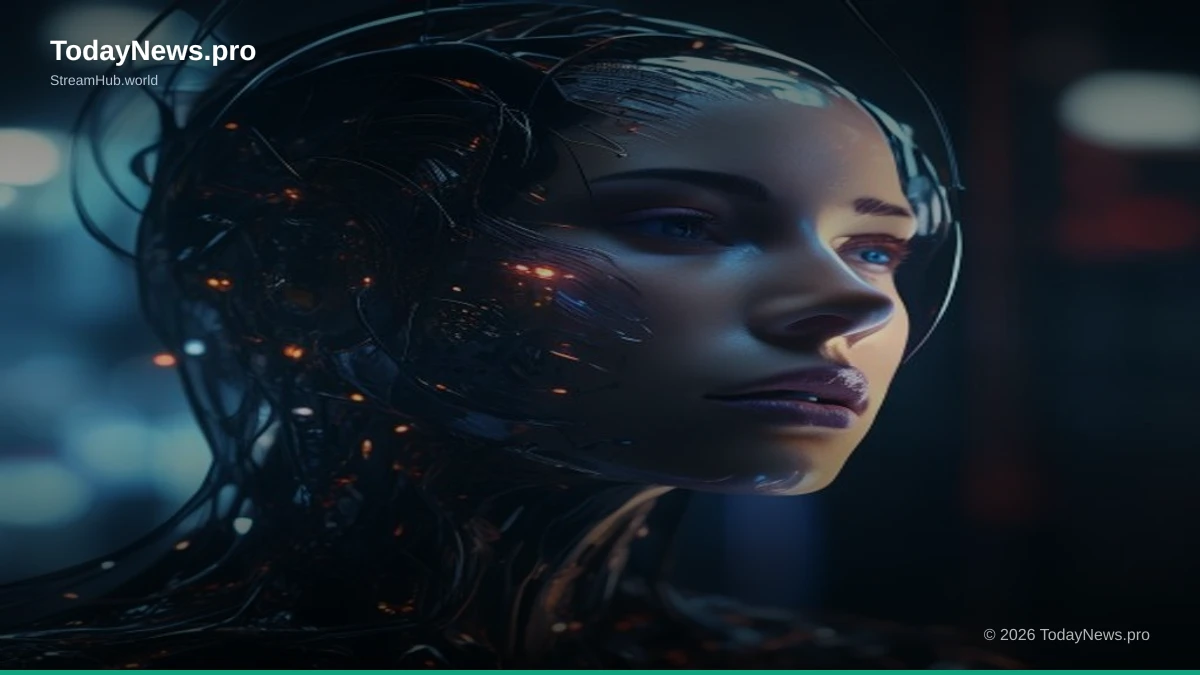
The global generative AI market, projected to reach $100 billion by 2028, is rapidly reshaping creative industries, from art and music to literature, blurring the lines between human and machine authorship.
The Dawn of Algorithmic Creativity
For centuries, art, music, and literature have been intrinsically linked to human emotion, experience, and ingenuity. The brushstroke, the melodic phrase, the turn of a phrase – these were once considered exclusively the domain of human consciousness. However, the advent of sophisticated Artificial Intelligence has begun to challenge this very notion. Generative AI, a branch of machine learning focused on creating new data that resembles existing data, is no longer a theoretical concept confined to research labs; it is a burgeoning reality producing works that are increasingly indistinguishable from, and sometimes surpass, human creations.
This technological leap isn't merely about automation; it's about augmentation and entirely new forms of expression. AI models, trained on vast datasets of existing creative works, learn patterns, styles, and structures, enabling them to generate novel outputs across various artistic mediums. This capability is not only democratizing creation but also pushing the boundaries of what we consider art and who we consider an artist.
From Data to Masterpiece
At its core, generative AI operates on complex algorithms and neural networks. These systems, often inspired by the human brain's structure, are capable of learning from massive amounts of data. For instance, an AI tasked with generating images might be fed millions of photographs and paintings, learning to associate shapes, colors, textures, and compositions. Similarly, music generation models analyze countless hours of symphonies, pop songs, and jazz improvisations to understand melody, harmony, rhythm, and instrumentation.
The process typically involves two main components: a generator and a discriminator. The generator creates new content, while the discriminator evaluates its authenticity, attempting to distinguish between real and AI-generated data. This adversarial process, known as a Generative Adversarial Network (GAN), refines the generator's output until it becomes highly convincing.
Generative AI Market Growth Projections
| Year | Market Size (USD Billion) | Compound Annual Growth Rate (CAGR) |
|---|---|---|
| 2023 (Estimate) | 10.1 | N/A |
| 2024 | 17.5 | 73.3% |
| 2025 | 30.0 | 71.4% |
| 2026 | 49.5 | 65.0% |
| 2027 | 77.0 | 55.6% |
| 2028 (Projection) | 100.0 | 29.9% |
Generative Art: Pixels with Purpose
The visual arts have been among the first to witness the dramatic impact of generative AI. Tools like Midjourney, DALL-E 2, and Stable Diffusion have democratized image creation, allowing individuals with no traditional artistic training to produce stunning visuals simply by typing descriptive prompts. These AI art generators can conjure anything from photorealistic landscapes and fantastical creatures to abstract compositions and stylistic imitations of famous artists.
The output can range from the bizarre to the breathtaking. Users can specify elements like "a steampunk cat wearing a monocle, sitting on a pile of books, in the style of Van Gogh," and the AI will endeavor to create such an image. This opens up new avenues for conceptual art, rapid prototyping for designers, and even personalized artistic creations for consumers.
The Ethics of AI-Generated Imagery
However, the rapid proliferation of AI-generated art has also sparked significant debate. Questions surrounding copyright, intellectual property, and the ethical implications of training models on existing artists' work without explicit consent are paramount. Many artists feel their styles are being mimicked or even appropriated by algorithms, potentially devaluing their unique contributions.
Moreover, the ease with which realistic-looking fake images can be generated raises concerns about misinformation and deepfakes. Distinguishing between authentic photography and AI-generated imagery is becoming increasingly difficult, posing a challenge to journalism and public trust.
The AI Composer: A Symphony of Code
Music, with its intricate structures of melody, harmony, and rhythm, presents a unique challenge and opportunity for generative AI. AI music composition tools can produce original pieces in various genres, from classical and electronic to pop and jazz. These systems can generate entire songs, provide background scores for films and games, or even assist human composers by generating musical ideas and variations.
Companies like Amper Music, Jukebox by OpenAI, and AIVA (Artificial Intelligence Virtual Artist) are at the forefront. Jukebox, for instance, can generate music with singing in various styles and languages, showcasing a remarkable ability to capture the nuances of human vocalization and musical expression. These AI composers can analyze vast musical libraries to understand emotional cues, genre conventions, and instrumental arrangements.
The Future of Music Creation
The implications for the music industry are profound. AI can accelerate the production process, allowing creators to iterate on ideas faster. It can also enable individuals without formal musical training to compose their own music, fostering a new wave of musical expression. For filmmakers and content creators, AI offers a readily available source of custom-tailored soundtracks, potentially reducing licensing costs and production time.
However, the question of artistic intent and originality remains. While AI can mimic styles and generate technically proficient music, the debate continues regarding whether it can truly imbue its creations with the emotional depth and lived experience that often defines human artistry. Will AI-generated music become ubiquitous background noise, or will it evolve into a new form of distinct artistic expression?
Literary Machines: Weaving Words with Algorithms
The written word, long considered the pinnacle of human intellect and narrative prowess, is also being touched by the generative AI revolution. Large Language Models (LLMs) like GPT-3, GPT-4, and their successors have demonstrated an astonishing ability to generate coherent, contextually relevant, and stylistically varied text. From drafting emails and writing code to composing poetry and crafting entire short stories, these models are becoming increasingly sophisticated.
The applications are vast. AI can assist authors in overcoming writer's block, generating plot ideas, developing character backstories, or even drafting entire chapters. For content creators, AI can produce marketing copy, social media posts, and website content at scale. Academic research is also benefiting, with AI capable of summarizing complex papers, generating literature reviews, and even assisting in hypothesis generation.
The Nuances of AI-Generated Literature
While AI can produce grammatically correct and engaging prose, the question of authentic voice and emotional resonance persists. Can an algorithm truly understand the human condition, capture subtle irony, or convey profound emotional depth in the way a human author can? Critics argue that AI-generated literature, while technically proficient, often lacks the unique perspective, lived experience, and subjective interpretation that makes human writing so powerful.
Furthermore, concerns about plagiarism and the homogenization of literary styles are valid. As AI models are trained on existing texts, there's a risk of them regurgitating or subtly altering existing content without proper attribution. The development of robust AI detection tools is becoming increasingly important in this landscape.
For more on the evolution of artificial intelligence and its societal impact, you can visit Wikipedia's Artificial Intelligence page.
The Artists Evolving Role: Collaboration or Replacement?
The rise of generative AI has ignited a fervent discussion about the future of human artists. The fear of outright replacement is palpable in some creative circles. If an AI can generate a piece of art, compose a song, or write a novel that is aesthetically pleasing and commercially viable, what becomes of the human creator?
However, a more nuanced perspective suggests a future of collaboration. Many artists are embracing AI as a powerful new tool in their arsenal. AI can serve as an infinite source of inspiration, a tireless assistant for tedious tasks, or a means to explore entirely new creative territories that would be impossible with traditional methods alone.
AI as a Creative Catalyst
Consider a painter using AI to generate preliminary sketches or explore color palettes before applying paint to canvas. A musician might use an AI to generate harmonic progressions or rhythmic patterns to build upon. A writer might leverage an LLM to brainstorm plot twists or refine dialogue. In these scenarios, AI doesn't replace the artist; it augments their capabilities, freeing them to focus on higher-level conceptualization and emotional expression.
This collaborative model shifts the definition of artistry. The skill may lie not only in the execution of a craft but also in the ability to effectively prompt, curate, and refine AI-generated outputs. The human artist becomes more of a director, a curator, or a visionary guiding the AI's creative potential.
Ethical Labyrinths and Future Frontiers
As generative AI becomes more integrated into our creative landscape, a host of ethical and philosophical questions demand our attention. The core issue often revolves around authorship, ownership, and the inherent value of art. When an AI generates a masterpiece, who is the artist? The AI? The programmer who developed it? The user who provided the prompt?
Copyright law, designed for human creators, is struggling to keep pace. The US Copyright Office, for example, has stated that works created solely by AI without human authorship are not eligible for copyright protection. This stance, however, is likely to evolve as AI capabilities advance and human involvement in the creation process varies.
The Question of Consciousness and Intent
Beyond legal frameworks, there's a deeper philosophical debate about whether AI can truly possess artistic intent or consciousness. Can an algorithm feel inspiration, express emotion, or convey a subjective worldview? For many, art is inherently tied to the human experience, and therefore, AI creations, however impressive, are merely sophisticated imitations. Others argue that if the output evokes genuine emotion and thought in the human observer, its origin becomes less relevant.
The future likely holds a spectrum of AI-assisted creation, from tools that simply automate tasks to systems that exhibit emergent creative behaviors. Navigating this future will require ongoing dialogue among technologists, artists, ethicists, and policymakers to ensure that AI serves to enrich, rather than diminish, our cultural landscape. For a broader understanding of the ethical considerations surrounding AI, consult Reuters' coverage of AI ethics.