

 Alexander Veller
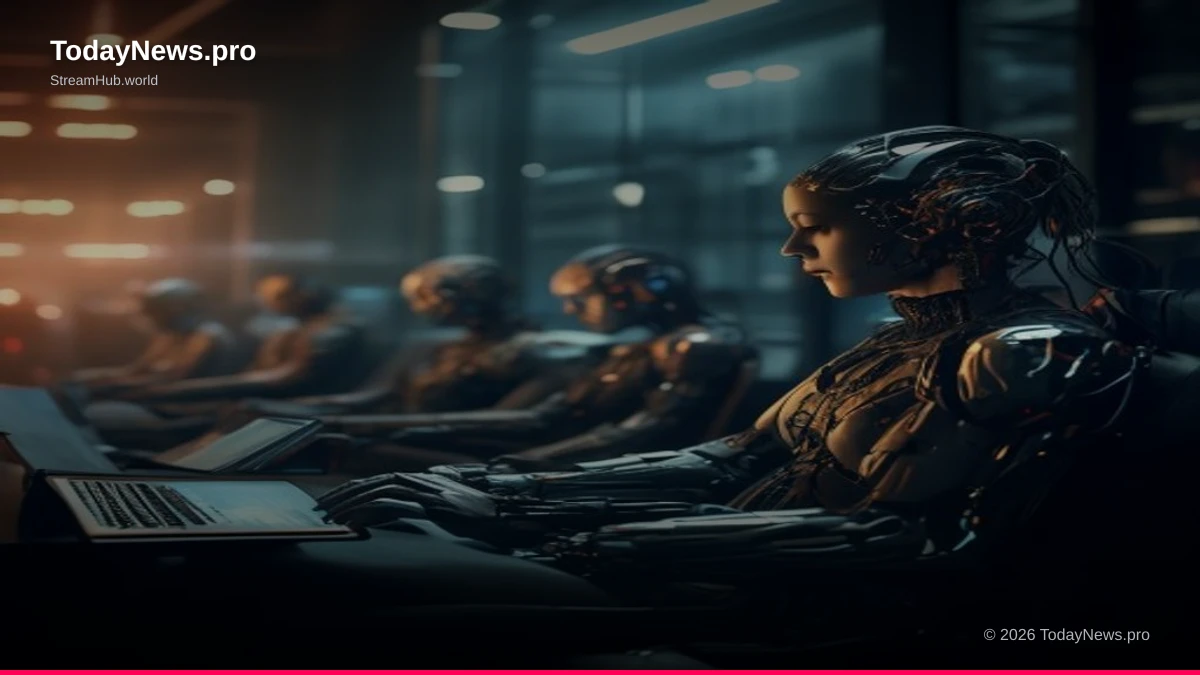
In 2023, the global market for AI-generated content, encompassing text, images, and video, was valued at approximately $1.5 billion, with projections indicating a compound annual growth rate (CAGR) exceeding 30% over the next decade, fundamentally reshaping how stories are conceived, produced, and consumed.
The Dawn of Algorithmic Authorship
For millennia, storytelling has been an intrinsically human endeavor, rooted in emotion, experience, and imagination. From ancient oral traditions etched into memory to the printed word and cinematic spectacle, narrative has served as a cornerstone of human culture, fostering connection, conveying knowledge, and exploring the depths of the human condition. However, the digital revolution, and more recently, the rapid advancements in artificial intelligence, are ushering in an era where algorithms are not merely tools but are increasingly becoming co-authors, if not nascent storytellers themselves.
The concept of machine-generated text has evolved dramatically. Early attempts were rudimentary, often producing nonsensical or grammatically awkward sentences. Today's large language models (LLMs), like OpenAI's GPT series or Google's LaMDA and PaLM, are capable of generating prose that is not only coherent but also contextually relevant, stylistically diverse, and at times, remarkably creative. This evolution from simple text generation to sophisticated narrative construction marks a significant paradigm shift.
The initial fascination with AI-generated stories often stemmed from novelty. However, as the capabilities of these models have matured, so too has the critical discourse surrounding their potential. We are no longer discussing whether AI *can* write, but rather, how it *does* write, what its limitations are, and what implications this has for the very definition of authorship and creativity.
From Markov Chains to Deep Learning
The journey of AI in text generation is a fascinating trajectory. Early systems, such as those based on Markov chains, predicted the next word based on the probability of its occurrence following a sequence of preceding words. While these could generate text that mimicked certain stylistic patterns, they lacked true understanding or narrative coherence over longer passages.
The advent of neural networks, particularly recurrent neural networks (RNNs) and later, transformer architectures, revolutionized the field. These models learn complex patterns and relationships within vast datasets of text, enabling them to generate more sophisticated, context-aware, and grammatically sound narratives. The transformer architecture, with its attention mechanisms, has been particularly instrumental in allowing models to weigh the importance of different words in a sequence, leading to a more nuanced understanding of context and meaning.
Wikipedia, a testament to collaborative human knowledge, offers a vast dataset for training these models. For more on the underlying technologies, one can explore Artificial Intelligence on Wikipedia.
AI as a Co-Creator: Tools and Techniques
The integration of AI into the creative process is not a monolithic phenomenon. It manifests in various forms, from AI acting as an idea generator to performing specific writing tasks, and even collaborating with human creators in real-time. This symbiotic relationship is often referred to as "augmented creativity" or "human-AI co-creation."
For writers and content creators, AI tools can serve as invaluable assistants. They can help overcome writer's block by suggesting plot points, character arcs, or dialogue. They can also automate repetitive tasks like summarizing existing content, generating variations of a scene, or even drafting initial outlines based on a few keywords or a brief synopsis. This frees up human creators to focus on higher-level conceptualization, emotional depth, and nuanced artistic expression.
The key lies in understanding AI as a powerful tool rather than a replacement for human creativity. The most compelling narratives still emerge from the unique blend of human insight, lived experience, and artistic vision. AI, in this context, amplifies these human qualities, offering new avenues for exploration and efficiency.
Prompt Engineering and Iterative Refinement
The effectiveness of AI-generated narratives is heavily dependent on the skill of the human user, particularly in the art of "prompt engineering." Crafting precise, detailed, and nuanced prompts is crucial for guiding the AI towards the desired narrative outcome. This involves specifying genre, tone, characters, plot elements, desired emotional impact, and even stylistic influences.
The process is often iterative. A user might generate a passage, review it, provide feedback, and refine the prompt to steer the AI's next output. This back-and-forth between human and machine allows for a degree of control and customization that was previously unimaginable. It transforms the creative process into a dynamic dialogue, where the human operator acts as a director, shaping the AI's generative capabilities.
AI in Scriptwriting and World-Building
Within the film and television industries, AI is beginning to make inroads into scriptwriting and world-building. Tools can assist in generating character backstories, suggesting plot twists, or even drafting entire scenes based on a high-level concept. For complex fictional universes, AI can help maintain consistency in lore, character relationships, and timelines, acting as a comprehensive knowledge base.
While AI may not yet possess the capacity for true emotional understanding or subjective artistic intent, its ability to process vast amounts of information and identify patterns can provide novel starting points or innovative solutions that a human writer might not have considered. This can lead to richer, more intricate narratives, especially in genres that rely heavily on detailed lore and complex plots.
The Shifting Landscape of Narrative Structure
AI-generated narratives are not bound by the traditional linear structures that have dominated storytelling for centuries. The inherent computational nature of AI allows for the exploration of more complex, non-linear, and dynamic narrative forms. This opens up exciting possibilities for how stories are told and experienced.
One of the most significant impacts is the potential for hyper-personalized narratives. An AI could, in theory, tailor a story to an individual user's preferences, interests, and even their emotional state. Imagine a novel where the plot subtly shifts based on your previous reading habits, or a screenplay where character dialogue adapts to your known personality traits. This level of personalization could lead to deeply immersive and engaging storytelling experiences.
Furthermore, AI can facilitate the creation of emergent narratives – stories that are not pre-written but evolve dynamically based on a set of rules, parameters, and user interactions. This is particularly relevant in the realm of interactive entertainment and gaming, where AI can generate unique storylines and challenges on the fly, ensuring that each playthrough is a distinct experience.
Non-Linearity and Branching Narratives
Traditional narratives often follow a clear beginning, middle, and end. AI, however, can readily generate stories with multiple branching paths, allowing for a multitude of potential outcomes. This concept is not entirely new; choose-your-own-adventure books and early interactive fiction explored these possibilities. However, AI can scale this exponentially, creating intricate webs of choices and consequences that can be explored in profound ways.
This capability is already being leveraged in video games, where AI-driven NPCs (non-player characters) can react dynamically to player actions, leading to emergent storylines. The potential for AI to orchestrate these complex branching narratives in literature or film is immense, offering audiences unprecedented agency in how they experience a story.
Procedural Content Generation in Storytelling
Procedural content generation (PCG) is a technique where content is created algorithmically rather than manually. In storytelling, PCG can be used to generate elements such as quests, character dialogues, or even entire plot outlines. This allows for the creation of virtually infinite story variations, making each experience unique.
For instance, an AI could procedurally generate a mystery novel where the culprit, the motive, and the clues are different for every reader, while still adhering to logical consistency and genre conventions. This approach could revolutionize how entertainment is produced, moving away from static, one-size-fits-all content towards dynamic, personalized experiences.
| Narrative Type | Key Characteristics | AI Potential | Human Dominance |
|---|---|---|---|
| Linear | Single plotline, chronological progression. | Assisted drafting, summary generation. | Emotional nuance, thematic depth, subjective experience. |
| Branching | Multiple plot paths and decision points. | Complex branching logic, consequence mapping, dynamic adaptation. | Meaningful choice design, character motivation for branches. |
| Emergent | Story evolves dynamically from rules and interactions. | Real-time generation of events, dynamic world state management. | Establishing overarching themes, managing player agency effectively. |
| Personalized | Tailored to individual user preferences. | Data analysis for adaptation, content customization. | Understanding nuanced emotional needs, creative control over personalization. |
Interactive Cinema: Audiences as Architects
The convergence of AI-generated narratives and interactive technologies is giving rise to "interactive cinema," a frontier where audiences are no longer passive viewers but active participants who can influence the direction and outcome of a story. This blurs the lines between film, video games, and immersive experiences.
Imagine a film where you can choose to follow a particular character, decide on a course of action for the protagonists, or even influence the emotional tone of a scene. AI plays a critical role in making this possible. It can dynamically adjust camera angles, lighting, music, and even the narrative trajectory in real-time based on viewer input, creating a truly personalized and responsive cinematic experience.
This shift moves storytelling from a broadcast model to a conversational one. The audience is not just receiving a story; they are collaborating in its creation. This has profound implications for audience engagement and the future of media consumption.
Real-time Adaptation and Responsive Storytelling
The core of interactive cinema lies in its ability to adapt in real-time. AI algorithms process viewer choices – whether through direct input, gaze tracking, or even biometric data – and then dynamically generate or select narrative content that aligns with those choices. This creates a feeling of genuine agency and immersion.
For example, in a thriller, if a viewer consistently chooses to play it safe, the AI might steer the narrative towards less risky scenarios. Conversely, a viewer who consistently opts for bold actions might find the story escalating in peril and excitement. This level of responsiveness makes each viewing a unique journey.
The Role of AI in Immersive Experiences
Beyond traditional screens, AI is also a driving force behind emerging immersive experiences, such as virtual reality (VR) and augmented reality (AR). In these environments, AI can generate dynamic virtual worlds, populate them with intelligent characters, and craft narratives that react to the user's presence and actions. This allows for stories that are not just watched but lived.
For instance, in a VR historical drama, an AI could generate conversations with historical figures that are contextually accurate and responsive to the user's questions, offering a deeply educational and engaging experience. The potential for AI to create believable, interactive environments is vast, transforming how we learn, play, and experience stories.
Ethical Frontiers and Creative Challenges
As AI-generated narratives and interactive cinema become more sophisticated, they raise a host of ethical questions and creative challenges that the industry must address. Issues of authorship, intellectual property, bias, and the potential displacement of human creatives are at the forefront of this discussion.
One of the most pressing concerns is the definition of authorship. When an AI generates a story, who is the author? The AI model itself? The developers who trained it? Or the human who crafted the prompt? Current legal frameworks are not adequately equipped to handle these nuances, leading to debates about copyright and ownership. The U.S. Copyright Office's stance on AI-generated content highlights the ongoing complexities.
Bias embedded in training data is another significant challenge. AI models learn from the vast datasets they are fed, and if these datasets contain historical biases related to race, gender, or other demographics, the AI-generated content will likely perpetuate those biases. Ensuring fairness and representation in AI-generated narratives requires careful data curation and algorithmic design.
Authorship, Copyright, and Intellectual Property
The traditional notion of a singular author with creative ownership is being challenged. AI can produce novel works, but who holds the copyright? Is it the programmer, the user, or the AI itself? This ambiguity creates legal and ethical quandaries. If AI-generated works are not copyrightable, it could stifle innovation. If they are, it could lead to complex ownership disputes.
Furthermore, the training data itself raises questions. If an AI learns from copyrighted works, does its output constitute a derivative work? These are intricate legal battles that are just beginning to unfold, with significant implications for creators and industries reliant on intellectual property.
Bias, Representation, and Responsible AI
AI models, trained on vast swathes of text and data from the internet, can inadvertently absorb and amplify existing societal biases. This can lead to AI-generated narratives that are stereotypical, discriminatory, or lacking in diverse representation. For example, if an AI is predominantly trained on stories featuring male protagonists in leadership roles, it might struggle to generate compelling narratives with female leads in similar positions without explicit guidance.
Ensuring responsible AI development in storytelling involves actively working to mitigate bias in training data, implementing bias detection mechanisms, and fostering a diverse team of developers and editors who can critically evaluate AI outputs. The goal is to create AI that promotes inclusivity and combats harmful stereotypes, rather than perpetuating them.
The Future of Human Creatives
A significant concern for many is the potential for AI to displace human writers, screenwriters, and other creative professionals. While AI can automate certain tasks, it is unlikely to replace the unique emotional intelligence, lived experience, and subjective artistry that human creators bring to their work. Instead, the role of the human creative is likely to evolve.
Human creatives may transition to roles as AI orchestrators, curators, and editors, guiding AI tools to produce nuanced and meaningful narratives. The focus might shift from pure content generation to conceptualization, thematic development, and the infusion of genuine human emotion and perspective. Collaboration will likely be the key to unlocking AI's full potential in storytelling.
The Future of Storytelling: A Hybrid Horizon
The trajectory of storytelling is clearly pointing towards a hybrid future, where human creativity and artificial intelligence work in concert. This synergy promises to unlock unprecedented levels of personalization, interactivity, and imaginative scope, fundamentally altering the relationship between creator, audience, and narrative itself.
We are moving beyond the era of AI as a mere novelty. The sophisticated LLMs and generative models of today are capable of producing content that is not only coherent but also emotionally resonant and stylistically diverse. The challenge and opportunity lie in harnessing these capabilities responsibly, ensuring that AI serves to enhance, rather than diminish, the richness and depth of human storytelling.
The evolution of storytelling is not a question of "AI versus humans," but rather "AI with humans." The most compelling narratives will likely emerge from this collaborative space, where the efficiency and vast generative power of AI are guided by the empathy, intent, and artistic vision of human creators. This hybrid model promises a future where stories are more dynamic, more accessible, and more deeply engaging than ever before.
Personalization at Scale
One of the most exciting prospects is the ability of AI to deliver personalized narratives at an unprecedented scale. Imagine digital books that adapt their endings based on reader choices, or interactive films that adjust dialogue and plot points to match a viewer's preferences and mood. This level of bespoke storytelling could foster a deeper emotional connection between the audience and the narrative.
AI can analyze vast amounts of data about an individual's preferences, past engagement, and even subtle emotional cues to tailor content in real-time. This moves beyond simple genre selection to deeply personalized narrative arcs, character interactions, and thematic explorations, making each story a truly unique experience for every consumer.
Democratization of Creative Tools
AI-powered storytelling tools have the potential to democratize the creation of narrative content. Individuals without extensive technical or artistic training could leverage these tools to bring their stories to life. This could lead to a proliferation of diverse voices and perspectives entering the storytelling landscape.
From aspiring novelists to independent game developers, AI can lower the barrier to entry for content creation. Tools that can assist with plot generation, character development, dialogue writing, and even visual asset creation could empower a new generation of storytellers, fostering a more vibrant and varied media ecosystem. The ease of access, combined with the power of AI, represents a significant shift in creative accessibility.
Case Studies in AI-Generated and Interactive Narratives
While the field is still nascent, several compelling examples showcase the potential of AI in narrative creation and interactive experiences. These case studies offer a glimpse into the future, demonstrating both the triumphs and the ongoing challenges.
One notable area is the use of AI in generating news articles or summaries. While not always considered "storytelling" in the fictional sense, these applications highlight AI's ability to synthesize information and present it in a coherent, readable format. Companies like The Associated Press have experimented with AI for generating financial reports, demonstrating efficiency and accuracy.
In the realm of creative writing, projects like "The Day the Internet Died" demonstrated AI's capacity to generate a cohesive novella based on a specific prompt. While the output may require human editing and refinement, it showcases the potential for AI to serve as a powerful co-writer, providing raw material and overcoming initial creative hurdles.
AI in Journalism and Content Generation
The use of AI in journalism is rapidly expanding, primarily for automating routine reporting tasks. AI can monitor data streams, identify trends, and generate factual reports on financial markets, sports scores, and weather patterns. While these are primarily informational, the underlying technology can be adapted for more narrative-driven content. The challenge lies in imbuing these AI-generated reports with the nuance and critical analysis typically provided by human journalists.
Many organizations are exploring AI for generating marketing copy, product descriptions, and even social media posts. This allows for rapid content creation and A/B testing of different messaging strategies. The ethical consideration here is transparency; audiences should ideally be aware when content is AI-generated.
Interactive Storytelling Platforms and Games
Video games have long been at the forefront of interactive storytelling. Modern game engines incorporate sophisticated AI for NPC behavior, dynamic quest generation, and adaptive storylines. Games like "Elden Ring" feature procedurally generated elements within a carefully crafted world, offering emergent gameplay and narrative possibilities. Platforms like Character.ai allow users to interact with AI "characters" that can hold remarkably coherent and contextually relevant conversations, hinting at the future of AI-driven role-playing and narrative engagement.
Interactive film projects, though less common, are emerging. These often involve branching narratives where viewer choices dictate the progression of the story. AI's role here is to manage these complex branching paths, ensure seamless transitions, and potentially even adapt the narrative based on the audience's collective or individual engagement. The convergence of AI, VR, and gaming is set to redefine what an interactive narrative can be.
Experimental AI Fiction Projects
Numerous experimental projects are pushing the boundaries of AI-generated fiction. Researchers and artists are using LLMs to create poetry, short stories, and even screenplays. These projects often highlight the emergent properties of AI, where unexpected and novel narrative elements can arise from the generative process. For instance, AI has been used to "continue" unfinished works by famous authors or to generate entirely new genres of literature.
The critical success of these projects often lies in the human curation and editing process. AI can generate vast quantities of text, but it is the human artist who selects, refines, and shapes that material into a compelling narrative. This iterative process of human-AI collaboration is key to unlocking the full creative potential of these technologies.