

 Alexander Veller
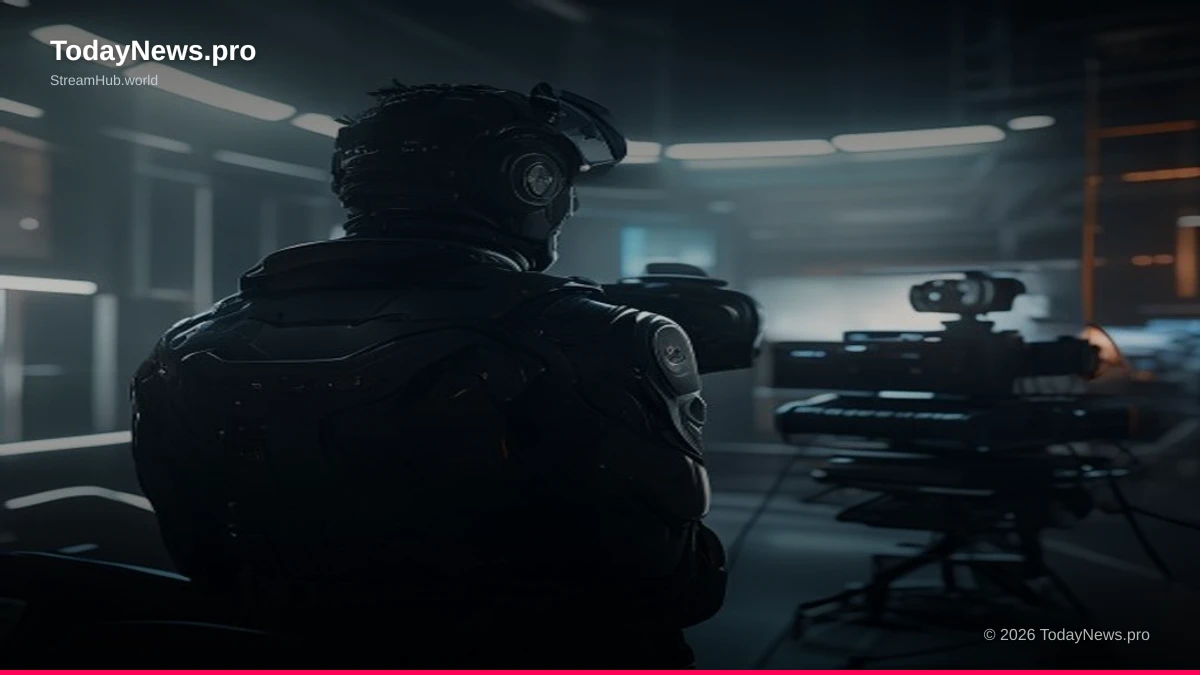
The global film and video production market is projected to reach a staggering $307.10 billion by 2026, a substantial portion of which will be influenced by emerging technologies, with Artificial Intelligence poised to be a transformative force.
The Dawn of Algorithmic Artistry: AI Enters the Studio
For decades, the film industry has been a bastion of human creativity, driven by intuition, emotion, and sheer artistic vision. However, the digital revolution, accelerated by leaps in Artificial Intelligence (AI), is fundamentally reshaping every facet of filmmaking. From the initial spark of an idea to the final viewing experience, AI is no longer a futuristic concept; it is a present-day tool, augmenting human capabilities and opening unprecedented avenues for storytelling and production. This technological tidal wave promises to democratize filmmaking, accelerate workflows, and create entirely new forms of cinematic expression, pushing the boundaries of what was once considered the exclusive domain of human artistry. The question is no longer *if* AI will change filmmaking, but *how profoundly* and *how quickly*.
Generative AI and Content Creation
At the forefront of this revolution are generative AI models. These sophisticated algorithms, trained on vast datasets of text, images, and video, can now produce novel content with remarkable coherence and creativity. Tools like OpenAI's GPT-3 and its successors are capable of generating entire narratives, dialogue, and scene descriptions, while image generators like DALL-E 2 and Midjourney can conjure visual concepts that were previously only imaginable.
This capability extends beyond mere text generation. AI models are being developed to assist in storyboarding, character design, and even the creation of rudimentary animated sequences. Imagine an AI that can take a textual description of a scene – "a bustling medieval marketplace under a stormy sky" – and generate a series of visual panels, complete with atmospheric lighting and character poses. This drastically reduces the time and resources traditionally required for pre-production conceptualization, allowing filmmakers to iterate on ideas at an unparalleled speed.
The Democratization of Filmmaking
Historically, the creation of high-quality visual content required significant capital investment in specialized equipment, software, and skilled personnel. AI is poised to lower these barriers to entry. Independent filmmakers, students, and even hobbyists can now leverage powerful AI tools to bring their visions to life without needing a large studio behind them. This democratization could lead to an explosion of diverse voices and stories reaching audiences, a welcome change from the often homogenized output of major studios.
Consider the potential for creating complex visual effects (VFX) that were once the sole purview of multi-million dollar productions. AI-powered VFX tools can automate tedious processes like rotoscoping, motion tracking, and even the generation of realistic digital actors or environments. This means that a small team could potentially achieve visual spectacle that previously demanded a dedicated VFX house.
Scriptwriting Reimagined: From Blank Page to Blockbuster Draft
The screenwriter's craft, long considered one of the most solitary and challenging aspects of filmmaking, is undergoing a significant transformation. AI-powered scriptwriting tools are emerging as powerful collaborators, not replacements, for human writers. These tools can analyze vast libraries of successful screenplays, identify narrative structures, character archetypes, and dialogue patterns that resonate with audiences. They can then assist writers by suggesting plot points, generating dialogue variations, or even outlining entire story arcs based on user prompts.
AI as a Collaborative Partner
The idea of AI writing a screenplay from scratch might seem daunting, but the current reality is far more nuanced and collaborative. AI excels at pattern recognition and data analysis, making it an invaluable tool for overcoming writer's block and exploring narrative possibilities. A writer can feed an AI a premise, a character description, or a desired genre, and the AI can generate multiple plot outlines, character backstories, or dialogue options. This allows the writer to sift through a wealth of creative output, selecting and refining the best elements.
Tools are also being developed to help refine existing scripts. AI can analyze dialogue for pacing and naturalness, identify plot holes, or even suggest alternative endings. This can significantly streamline the revision process, saving valuable time and resources for production teams. For instance, an AI could flag instances where a character's dialogue feels repetitive or out of character, prompting the writer to reconsider their approach.
Generating Story Ideas and Concepts
Beyond refining existing work, AI can be a powerful engine for generating entirely new story ideas. By analyzing trends in popular culture, audience preferences, and even historical events, AI can suggest novel concepts that might have broad appeal. Imagine an AI that can identify unmet genre niches or predict the next big cinematic trend, providing writers with fertile ground for exploration. This is not about replacing human imagination, but about augmenting it with data-driven insights and a vast combinatorial capacity.
For example, an AI might analyze successful science fiction films and identify common thematic elements, then suggest a new premise that combines elements from disparate successful works in an unexpected way. This could lead to the development of entirely fresh intellectual properties that capture audience attention.
Data-Driven Script Analysis
One of the most impactful applications of AI in scriptwriting is its ability to perform data-driven analysis. AI can analyze thousands of scripts to understand what makes them successful, identifying correlations between plot structures, character arcs, and audience reception. This data can inform decisions made during the writing process, helping to craft stories that are more likely to resonate with viewers.
For instance, an AI could analyze the emotional arc of a protagonist in a series of successful dramas and provide insights into the optimal pacing of emotional beats within a narrative. This doesn't dictate the story, but it offers valuable guidance for constructing a compelling and engaging character journey. This is akin to a cinematographer using a light meter to ensure proper exposure, but applied to the narrative itself.
Animating the Impossible: AIs Visual Revolution
Animation, once a painstaking and labor-intensive art form, is being revolutionized by AI. From character rigging and motion capture cleanup to the generation of entirely new animated sequences, AI is accelerating workflows and enabling previously unimaginable visual feats. This technology has the potential to dramatically reduce production costs and time, making high-quality animation more accessible to a wider range of creators.
Automated Animation Workflows
Traditional animation involves countless hours of meticulous work by skilled artists. AI is stepping in to automate many of these repetitive and time-consuming tasks. For instance, AI can be used to automatically generate in-between frames in traditional animation, a process known as "tweening," significantly speeding up the animation pipeline. Similarly, AI can assist in the cleanup and refinement of motion capture data, ensuring smoother and more realistic character performances.
Furthermore, AI-powered tools can assist in character rigging, the process of creating a skeletal structure for a digital character that allows animators to control its movement. AI can analyze character meshes and suggest optimal rigging configurations, reducing the manual effort required by technical directors. This allows animators to focus more on the artistic nuances of movement rather than the technical setup.
Generative Animation and Style Transfer
The most exciting frontier in AI-powered animation is the ability to generate entirely new animated content. Generative AI models can now create short animated clips from textual descriptions or a series of still images. This opens up possibilities for rapid prototyping of animated scenes or even the creation of entirely AI-generated short films. The visual styles can also be manipulated, with AI able to transfer the artistic style of one image or animation onto another.
Imagine a filmmaker describing a scene – "a flock of birds taking flight from a sun-drenched field" – and an AI generating a short, stylized animation of that event. This can be used for concept development, background elements, or even as a foundation for more detailed animation work. Style transfer allows for unique visual aesthetics, where an animation can be rendered in the distinct visual language of a famous painter or a specific art movement.
Virtual Production and Real-time Rendering
AI is also playing a crucial role in the advancement of virtual production techniques. These techniques, which often involve shooting actors in front of LED screens displaying digital environments, benefit from real-time rendering and sophisticated scene manipulation. AI can help to generate and refine these virtual environments, as well as assist in the seamless integration of live-action footage with CG elements.
For example, AI can analyze camera movements and adjust the virtual background in real-time to maintain perfect perspective and parallax, creating a more immersive and believable experience for actors and a more efficient workflow for directors. The ability to see and interact with the final rendered environment during the shoot significantly reduces the need for extensive post-production work.
| Year | Global AI in Animation Market (USD Billion) |
|---|---|
| 2023 | 1.5 |
| 2025 | 3.2 |
| 2028 | 7.8 |
| 2030 | 15.5 |
Personalized Cinema: Tailoring the Viewers Journey
The future of filmmaking isn't just about how films are made; it's also about how they are experienced. AI is paving the way for a truly personalized cinematic journey, where content can be dynamically adapted to individual viewer preferences, moods, and even real-time engagement. This shift moves away from the one-size-fits-all model of traditional distribution towards a more interactive and customized viewing experience.
Dynamic Storytelling and Branching Narratives
Imagine a film where the plot can subtly alter based on your choices, your viewing history, or even your real-time emotional response detected through biometric data. AI can enable complex branching narratives, allowing viewers to influence character decisions, explore different plotlines, or even experience alternate endings. This moves beyond simple "choose your own adventure" formats into a more sophisticated and fluid form of interactive storytelling.
Tools are being developed that can analyze viewer engagement metrics – gaze tracking, heart rate, and even vocal inflections – to understand how the audience is reacting to a film. This data can then be used to trigger subtle changes in the narrative, such as adjusting the pacing of a scene, introducing or removing a subplot, or even altering the emotional tone of the music. This creates a deeply personal connection between the viewer and the on-screen content.
Content Recommendation and Curation
While streaming platforms already employ AI for content recommendation, future iterations will become far more sophisticated. Instead of simply suggesting films based on past viewing habits, AI will be able to understand nuanced preferences, predict future interests, and even curate personalized film festivals for individual users. This could involve recommending films that share specific thematic elements, directorial styles, or even emotional undertones.
AI could also assist in creating "super-cuts" of existing films, tailoring the length and focus of a movie to a specific viewer's attention span or interest. For example, a viewer interested primarily in action sequences might receive a version of a film that emphasizes those elements, while another viewer interested in character development could receive a version that prioritizes dramatic scenes. This is a radical departure from the fixed cinematic product.
Accessibility and Inclusivity
AI's ability to personalize content also holds immense promise for enhancing accessibility and inclusivity in filmmaking. AI can generate real-time captions, audio descriptions, and even sign language interpretations tailored to individual needs. For instance, an AI could dynamically adjust the speed and clarity of audio descriptions based on a visually impaired viewer's cognitive load, or generate personalized subtitle styles for individuals with dyslexia.
Beyond accessibility features, AI could also be used to adapt content for different cultural contexts or language nuances, ensuring a more universally understandable and relatable experience. This could involve subtle adjustments to dialogue, visual cues, or thematic emphasis to better resonate with diverse global audiences.
Ethical Labyrinths and Creative Control: Navigating the AI Frontier
As AI becomes more deeply embedded in filmmaking, it presents a complex web of ethical considerations and challenges related to intellectual property, authorship, bias, and the very definition of creativity. Navigating these uncharted territories requires careful consideration and proactive solutions to ensure that AI serves as a tool for artistic enhancement rather than a threat to human creators.
Intellectual Property and Authorship
One of the most pressing questions is who owns the copyright to content generated by AI. If an AI writes a script or creates a visual asset, does the copyright belong to the AI developer, the user who prompted the AI, or the AI itself (a concept currently not legally recognized)? Current copyright laws are ill-equipped to handle AI-generated works, leading to a legal gray area that could stifle innovation or lead to widespread disputes.
Furthermore, the use of AI trained on existing copyrighted material raises concerns about derivative works and fair use. If an AI generates an image or a scene that is heavily influenced by existing artistic styles or specific copyrighted content, where does the line between inspiration and infringement lie? This necessitates the development of new legal frameworks and industry standards.
Bias in AI and Representation
AI models are trained on vast datasets, and if these datasets contain inherent biases – whether racial, gender, or cultural – the AI will inevitably replicate and potentially amplify these biases in its output. This could lead to the perpetuation of harmful stereotypes in scripts, character designs, or even the way stories are told.
For example, if an AI is trained primarily on Western media, it might struggle to authentically represent non-Western cultures or may default to stereotypical portrayals. Ensuring diversity and inclusivity in AI training data, and developing AI systems that can actively identify and mitigate bias, is crucial for creating a more equitable and representative cinematic landscape.
The Specter of Deepfakes and Misinformation
The advancement of AI in generating realistic imagery and video also raises concerns about the potential for malicious use, such as the creation of deepfakes. Deepfake technology, which uses AI to create hyper-realistic fabricated videos or audio recordings, can be used to spread misinformation, damage reputations, or even influence political discourse. Safeguards are urgently needed to detect and combat the spread of AI-generated disinformation.
Filmmakers must also grapple with the ethical implications of using AI to generate "digital actors" or to alter existing performances. While this can offer creative possibilities, it also blurs the lines of authenticity and consent, especially when dealing with the likeness of deceased actors or individuals who have not given their explicit permission.
The Evolving Role of the Human Creator
The narrative that AI will entirely replace human creators in filmmaking is a simplistic one. Instead, the more likely future involves a symbiotic relationship, where AI acts as a powerful co-pilot, augmenting human creativity, streamlining processes, and freeing up artists to focus on higher-level conceptualization, emotional storytelling, and the unique nuances that only human experience can provide.
Augmentation, Not Replacement
AI's strengths lie in its computational power, its ability to process vast amounts of data, and its capacity for rapid iteration. Human creators, on the other hand, possess intuition, emotional intelligence, lived experience, and the ability to imbue their work with genuine empathy and cultural understanding. The most compelling cinematic experiences will likely arise from the synergistic combination of these attributes.
Think of AI as a super-powered assistant. It can handle the tedious tasks of rendering, generating variations, or performing complex simulations, allowing a director to spend more time refining the emotional arc of a scene, a screenwriter to focus on character depth, or an animator to inject subtle, human-like expressiveness into a character's performance. The human element remains paramount for storytelling that truly connects with an audience on an emotional level.
The Rise of the AI Whisperer
New roles are emerging within the film industry, centered around the effective utilization of AI. The "AI Whisperer," for instance, is a creative professional who understands how to best prompt, guide, and refine AI tools to achieve specific artistic outcomes. This requires a blend of technical understanding, creative vision, and an intuitive grasp of how to communicate complex ideas to an artificial intelligence.
These professionals will be adept at crafting precise prompts for generative AI, curating and editing AI-generated content, and integrating AI-assisted workflows seamlessly into the production pipeline. Their skill will lie not just in understanding the technology, but in harnessing its potential to serve artistic goals. This role is akin to a conductor leading an orchestra, where the instruments are powerful AI models.
Focus on Higher-Order Creativity
By offloading repetitive and computationally intensive tasks to AI, human creators can dedicate more time and energy to the aspects of filmmaking that are uniquely human: emotional depth, thematic exploration, nuanced character development, and the injection of personal perspective and artistic intent. This shift allows for a deeper engagement with the creative process and the potential for more original and impactful storytelling.
The future of filmmaking is not a battle between humans and machines, but an evolving partnership. The human artist will continue to be the visionary, the storyteller, and the emotional core of cinema, while AI will serve as an indispensable tool to help bring those visions to life with greater efficiency, scope, and innovation.
Looking Ahead: The Symbiotic Future of Filmmaking
The integration of AI into filmmaking is not a fleeting trend; it is a fundamental paradigm shift that will continue to evolve at an accelerating pace. The coming years will witness further advancements in AI's capabilities, leading to even more sophisticated tools for scripting, animation, visual effects, and personalized audience experiences. The industry must adapt, embrace innovation, and proactively address the ethical and creative challenges that arise.
The Next Wave of AI Innovation
We can anticipate AI models becoming even more adept at understanding complex narrative structures, generating emotionally resonant dialogue, and creating photorealistic visual assets with minimal human input. The development of more intuitive AI interfaces will also make these powerful tools accessible to a broader spectrum of creators. Furthermore, AI will likely play a greater role in post-production, from intelligent editing and color grading to advanced sound design and mastering.
The convergence of AI with other emerging technologies, such as virtual reality (VR) and augmented reality (AR), promises to unlock entirely new forms of immersive cinematic storytelling. AI could be used to dynamically generate and adapt VR environments in real-time based on user interaction, creating truly personalized and interactive virtual worlds.
Industry Adaptation and Skill Development
For the film industry to thrive in this new landscape, a commitment to continuous learning and adaptation is essential. Educational institutions and training programs will need to evolve to equip future filmmakers with the skills necessary to work alongside AI. This includes not only technical proficiency with AI tools but also a strong understanding of AI ethics, creative prompting, and the ability to critically evaluate AI-generated content.
Studios and production companies will need to invest in AI infrastructure, develop robust ethical guidelines, and foster a culture that embraces innovation. The ability to effectively leverage AI will become a significant competitive advantage, influencing everything from pre-production efficiency to audience engagement. Resources like Wikipedia's AI page offer foundational knowledge for understanding the underlying technology.
A Future of Collaborative Creation
The ultimate impact of AI on filmmaking will be determined by how creatively and ethically it is implemented. The goal should be to harness AI's power to augment human creativity, democratize access to filmmaking tools, and elevate the cinematic experience for audiences worldwide. The future is not one of AI replacing humans, but of humans and AI collaborating to tell stories in ways we can only begin to imagine.
As Reuters reports, the generative AI boom is poised to disrupt creative industries. This disruption, while challenging, also presents immense opportunities for innovation and artistic growth. The cinematic landscape of tomorrow will undoubtedly be shaped by the intelligent and imaginative integration of artificial intelligence.