

 Marcus Thorne
⏱ 18 min
The global market for AI in media and entertainment is projected to reach over $70 billion by 2028, a staggering figure that underscores the profound integration of artificial intelligence into creative industries, fundamentally reshaping how films are conceived, produced, and experienced. Beyond Deepfakes: The Evolving Landscape of AI in Filmmaking
The term "deepfake" has become synonymous with AI's disruptive potential in visual media, often conjuring images of manipulated realities and uncanny valley performances. However, this narrow perception fails to capture the expansive and sophisticated ways artificial intelligence is being woven into the fabric of filmmaking. From revolutionizing scriptwriting and storyboarding to empowering new forms of visual effects and character creation, AI is no longer a fringe technology but a central engine of innovation driving the future of cinema. This evolution extends far beyond simple facial replacement, venturing into the creation of entirely new digital performers and immersive cinematic experiences that were once the exclusive domain of science fiction.Defining the New Frontier
Artificial intelligence in filmmaking encompasses a broad spectrum of technologies, including machine learning, natural language processing, computer vision, and generative AI. These tools are being deployed to automate repetitive tasks, enhance creative decision-making, and unlock unprecedented levels of visual fidelity and narrative complexity. The industry is witnessing a paradigm shift, moving from AI as a supplementary tool to AI as a co-creator and an indispensable element of the modern production pipeline.The Democratization of Filmmaking
One of the most significant impacts of AI is its potential to democratize filmmaking. Advanced AI tools can lower the barrier to entry for independent filmmakers by automating complex post-production processes, reducing the need for expensive software and highly specialized personnel. This enables smaller studios and individual creators to achieve a level of visual polish previously only accessible to major Hollywood productions.The Genesis: From Deepfakes to Digital Performers
The public's initial encounter with AI in visual media was largely through the phenomenon of deepfakes. These AI-generated videos, which convincingly superimpose one person's likeness onto another's body, sparked widespread debate about authenticity, consent, and the potential for misinformation. While the ethical concerns surrounding deepfakes remain, the underlying technology has matured dramatically, laying the groundwork for more constructive applications within the film industry.The Technical Evolution of Face Swapping
Early deepfake technology relied on Generative Adversarial Networks (GANs) to create realistic, yet often imperfect, face swaps. Over time, algorithms have become more sophisticated, capable of rendering subtle facial expressions, lighting consistency, and seamless integration with the original footage. This evolution is crucial for its application in film, where minute details can significantly impact believability.90%
Reduction in time for certain VFX tasks with AI assistance
75%
Increase in demand for AI specialists in media
$500M+
Estimated annual savings for major studios through AI integration
Beyond Mimicry: Creating New Realities
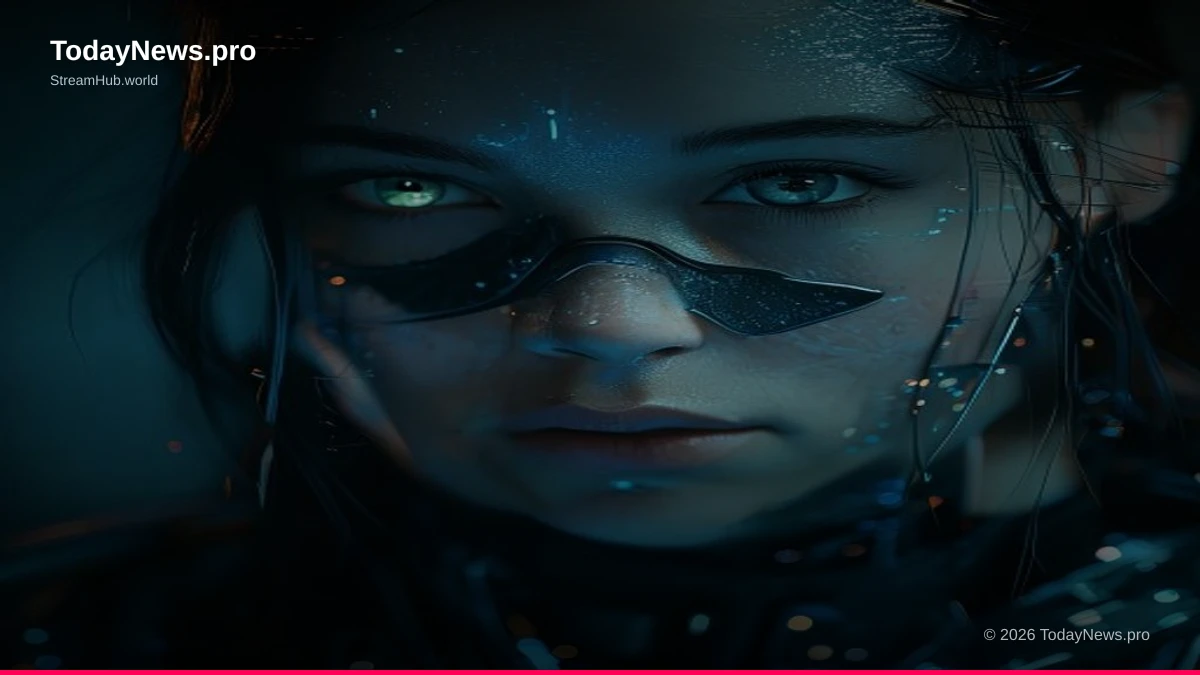
The progression from mimicking existing individuals to generating entirely novel digital characters represents a significant leap. AI is now capable of not only replicating human faces but also creating photorealistic humans with unique features, expressions, and emotional nuances. This opens the door to entirely digital actors who can be tailored to specific roles, unbound by the limitations of human performers."The leap from deepfakes to creating sentient-seeming digital actors is not just about technological advancement; it’s about redefining what performance means. We're moving from replicating reality to crafting entirely new ones, where characters can be built from the ground up with specific narrative and emotional requirements."
— Dr. Anya Sharma, AI Ethics Researcher
AIs Expanding Role in Pre-Production and Production
The influence of AI is felt throughout the entire filmmaking process, starting long before cameras begin to roll. Its ability to analyze vast datasets and generate creative outputs is streamlining pre-production and enhancing on-set efficiency.Scriptwriting and Storyboarding Automation
Natural Language Processing (NLP) models are now capable of analyzing existing scripts, identifying narrative patterns, and even generating story ideas, character arcs, and dialogue. While human writers remain essential for nuanced storytelling, AI can act as a powerful brainstorming partner, overcoming writer's block and suggesting novel plot developments. Similarly, AI can translate script descriptions into visual storyboards, accelerating the pre-visualization process.Virtual Production and Set Design
AI plays a crucial role in virtual production, a technique that combines digital assets with live-action filming. AI algorithms can optimize real-time rendering, manage complex lighting environments, and even generate procedural environments based on high-level parameters. This allows filmmakers to create elaborate sets and locations digitally, reducing the need for costly physical builds and location shoots.| AI Application Area | Key Technologies Involved | Impact on Filmmaking |
|---|---|---|
| Script Analysis & Generation | Natural Language Processing (NLP), Machine Learning | Faster script development, idea generation, narrative optimization. |
| Storyboarding & Pre-visualization | Computer Vision, Generative AI | Rapid visual translation of scripts, enhanced planning. |
| Virtual Production | Real-time Rendering, AI-driven Scene Generation, Computer Vision | Creation of complex digital environments, cost reduction, increased flexibility. |
| Character Animation & Performance Capture | Machine Learning, Deep Learning | More realistic motion, emotional expression, data-driven animation. |
| Visual Effects (VFX) | Generative AI, Computer Vision, Machine Learning | Automated rotoscoping, AI-powered compositing, novel effect generation. |
Optimizing Cinematography and Editing
AI can analyze footage to suggest optimal camera angles, lighting setups, and even predict audience engagement with different shots. In post-production, AI-powered editing tools can automatically assemble rough cuts, color grade footage, and enhance audio, significantly reducing the time editors spend on laborious tasks.The Rise of Virtual Actors: Capabilities and Challenges
Perhaps the most captivating and controversial application of AI in filmmaking is the emergence of virtual actors. These are digital characters, often rendered with photorealistic detail and capable of nuanced performances, that can be created and controlled entirely by AI.Unprecedented Creative Freedom
Virtual actors offer filmmakers unparalleled creative freedom. They can be designed to embody any character imaginable, free from the constraints of human physicality, age, or even species. This allows for the creation of fantastical creatures, historical figures resurrected with uncanny accuracy, or entirely new protagonists for science fiction narratives.The Photorealism Paradox
Achieving true photorealism in virtual actors is an ongoing challenge. While AI can generate stunning visuals, imbuing digital characters with genuine human emotion and subtle micro-expressions that resonate with audiences requires sophisticated algorithms and extensive datasets. The "uncanny valley" – the phenomenon where a human-like but imperfectly rendered character evokes feelings of unease – remains a hurdle.Performance Capture and AI Synergy
The most effective virtual actors are often a hybrid of AI and advanced performance capture. Real actors' movements, facial expressions, and vocal performances can be captured and then refined or enhanced by AI. This allows for the creation of digital doubles that retain the essence of the human performance while offering the flexibility of digital manipulation. Projects like "The Mandalorian," with its use of virtual sets and digital characters, showcase this synergy. Wikipedia: The Mandalorian."The key to believable virtual actors lies in the meticulous replication of human subtleties. AI can generate incredible likenesses, but it's the nuanced flick of an eyebrow, the slight tremor in a voice – these are the elements that AI is learning to capture and, in some cases, even invent to serve the narrative."
— Jian Li, Lead AI R&D, Lumina Studios
Ethical and Creative Implications for the Industry
The integration of AI into filmmaking raises profound ethical questions and challenges traditional creative paradigms. Navigating these complexities is crucial for the responsible development and deployment of these powerful technologies.The Question of Authenticity and Consent
The use of AI to generate or manipulate performances, particularly those based on real individuals, brings issues of consent and digital likeness to the forefront. How do we ensure that actors' rights are protected when their digital counterparts can be used indefinitely or in ways they did not approve? The debate around digital resurrection of deceased actors, like Peter Cushing in "Rogue One," highlights these concerns. Reuters: AI in filmmaking.Impact on Human Actors and the Workforce
The rise of virtual actors and AI-driven automation inevitably sparks anxieties about job displacement for human actors, stunt performers, and VFX artists. While AI can create new roles, the nature of existing roles may shift dramatically, requiring reskilling and adaptation within the industry. Studios must consider how to integrate AI in a way that augments human talent rather than replacing it entirely.Creative Ownership and Copyright
Who owns the copyright to a performance generated entirely by AI? How do we attribute creative credit when AI plays a significant role in scriptwriting or visual creation? These are uncharted legal and creative territories that will require new frameworks and precedents to be established.The Future Blueprint: What Lies Ahead for AI-Driven Cinema
The trajectory of AI in filmmaking points towards an increasingly integrated and symbiotic relationship between human creativity and artificial intelligence. The future promises not just more efficient production but entirely new forms of cinematic storytelling.Personalized and Interactive Storytelling
Imagine films that adapt to individual viewer preferences, with storylines, character interactions, or even endings that change based on viewer choices or past viewing history. AI could enable truly personalized and interactive cinematic experiences, blurring the lines between passive viewing and active participation.AI as a Creative Partner
The role of AI will likely evolve from a tool to a true creative partner. AI systems could co-write scripts, design entire virtual worlds, and even direct scenes, collaborating with human filmmakers in a dynamic feedback loop. This partnership could unlock creative potentials currently unimaginable.The Metaverse and AI-Generated Worlds
The burgeoning metaverse offers fertile ground for AI-driven filmmaking. AI can generate vast, dynamic virtual environments and populate them with intelligent non-player characters (NPCs) that react realistically to users. This could lead to the creation of persistent, evolving cinematic universes accessible to global audiences.Case Studies: Real-World AI Integration
Several prominent films and studios are already leveraging AI to push the boundaries of visual storytelling and production efficiency.Avatar and Digital Human Technology
James Cameron's "Avatar" franchise, with its groundbreaking use of performance capture and digital character creation, paved the way for many of the advancements we see today. While not purely AI-driven in its early stages, the sophisticated digital humans and environments of Pandora were precursors to AI's role in generating realistic virtual beings.AI in Modern Blockbusters
Studios like Industrial Light & Magic (ILM) and Weta Digital are increasingly incorporating AI into their VFX pipelines. AI is used for tasks such as de-aging actors, creating complex crowd simulations, and generating photorealistic textures and environments. The efficiency gains allow for more ambitious visual storytelling.Independent Innovation
Beyond the major studios, smaller companies and research institutions are developing specialized AI tools for filmmaking. These range from AI-powered script analysis platforms to generative AI models capable of creating short films from textual prompts, showcasing the broad accessibility of these evolving technologies.What is the primary difference between deepfakes and virtual actors?
Deepfakes typically involve superimposing one person's likeness onto another's body in existing footage, often for manipulation. Virtual actors, on the other hand, are entirely AI-generated digital characters created from scratch, possessing unique appearances and performances, often used to portray original characters or digital doubles.
Will AI replace human actors entirely?
It is unlikely that AI will replace human actors entirely. While AI can create virtual performers and automate certain tasks, human actors bring a depth of emotion, intuition, and lived experience that AI currently cannot replicate. The trend is towards AI augmenting human performances and creating new types of digital roles, rather than wholesale replacement.
How does AI assist in scriptwriting?
AI, particularly through Natural Language Processing (NLP), can analyze vast amounts of text data to identify narrative structures, suggest plot points, generate dialogue, and even create character backstories. It acts as a powerful tool for overcoming writer's block and exploring creative possibilities, but human oversight and creative input remain crucial.
What are the main ethical concerns surrounding AI in filmmaking?
Key ethical concerns include issues of consent regarding the use of digital likenesses (especially for deceased actors or without permission), potential job displacement for human performers, the spread of misinformation through deepfakes, and questions of creative ownership and copyright for AI-generated content.