

 Scott Wright
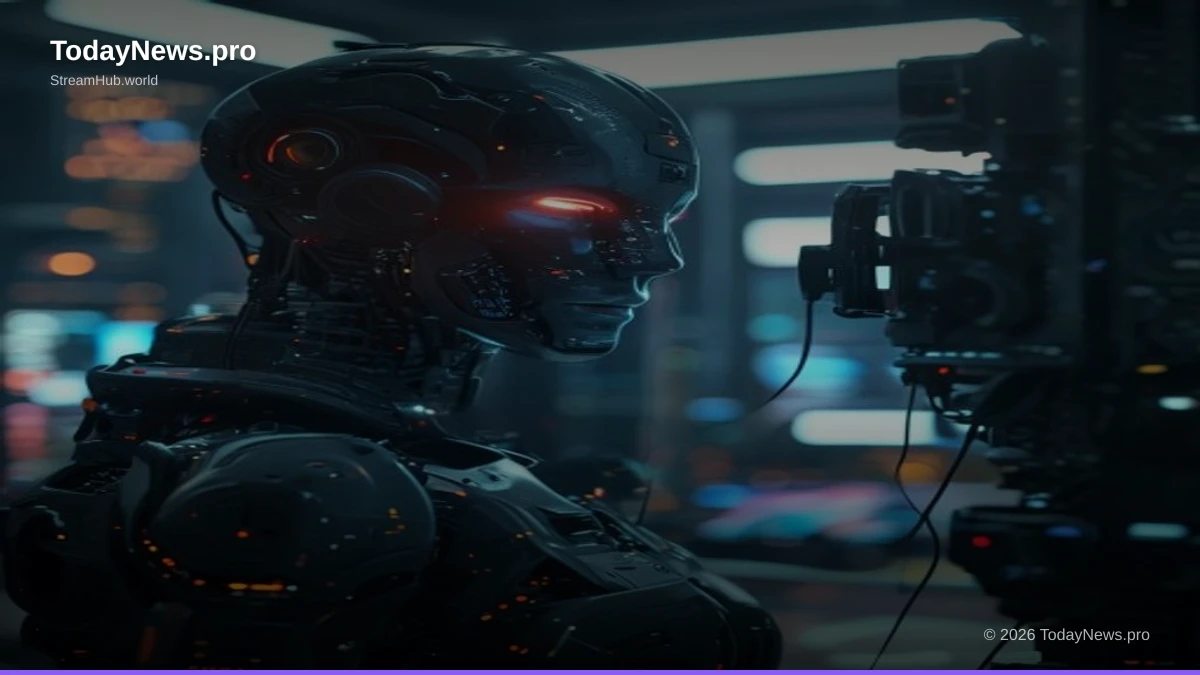
The global film industry is projected to reach over $137 billion by 2027, and a significant, often unseen, contributor to this growth is the burgeoning integration of Artificial Intelligence, transforming every stage from scriptwriting to final color grading.
AIs Silent Takeover of Hollywood
Once relegated to the realm of science fiction within films themselves, Artificial Intelligence is now a tangible, powerful force reshaping the very fabric of filmmaking. From analyzing audience trends to generating photorealistic digital actors, AI is no longer a futuristic concept but a present-day reality streamlining processes, unlocking creative potential, and pushing the boundaries of visual storytelling. The whispers of AI's involvement have grown into a resounding chorus, impacting how stories are conceived, captured, and ultimately presented to the world.
The Evolving Landscape
The sheer complexity and cost associated with modern film production have always been a driving force for innovation. AI offers a paradigm shift, promising to democratize aspects of filmmaking while simultaneously enabling unprecedented levels of visual fidelity and narrative depth. Studios and independent filmmakers alike are exploring AI's capabilities to reduce budgets, accelerate timelines, and enhance artistic vision in ways previously unimaginable. The film industry, known for its embrace of cutting-edge technology, is now witnessing one of its most profound transformations yet.
This integration is not about replacing human creativity but augmenting it. AI tools are being developed to handle repetitive tasks, analyze vast datasets, and offer predictive insights, freeing up filmmakers to focus on the core elements of storytelling and artistic expression. The aim is to create more compelling, visually stunning, and emotionally resonant cinematic experiences.
Pre-Production: Script to Screen with AI
The journey of a film begins long before the cameras roll, and AI is making its mark even in the nascent stages of development. Script analysis, casting suggestions, and even the generation of initial storyboards are now areas where AI algorithms are proving their worth. By sifting through mountains of data, AI can identify narrative patterns, predict audience reception, and even suggest character arcs that resonate most effectively.
AI-Powered Script Analysis
Understanding what makes a script successful is a perennial challenge. AI can analyze scripts for structural integrity, pacing, character development, dialogue authenticity, and even potential marketability. Machine learning models trained on vast libraries of successful and unsuccessful screenplays can flag potential issues before they become costly problems in production. This data-driven approach offers a new layer of insight, complementing the intuition of human writers and producers.
Furthermore, AI can identify clichés, predict tonal inconsistencies, and even suggest alternative dialogue options that might be more impactful or natural. This granular level of analysis allows for a more robust and refined script, increasing the probability of a positive audience response and critical acclaim. The goal is not to automate writing but to provide an intelligent co-pilot for the creative process.
Intelligent Casting and Storyboarding
Casting is another critical pre-production phase where AI is finding applications. By analyzing actor performance databases, facial recognition, and even vocal characteristics, AI can suggest actors who not only fit the physical description of a character but also possess the right emotional range and screen presence. This can speed up the often lengthy and subjective casting process.
AI is also being used to generate concept art and storyboards. By inputting script descriptions or stylistic preferences, AI can produce a range of visual interpretations, providing filmmakers with a diverse palette of ideas to guide their visual direction. This accelerates the visualization process, allowing for quicker iteration and refinement of the film's aesthetic. For more on the history of film technology, see Wikipedia's History of Film.
On-Set Efficiency: AI as a Digital Assistant
The controlled chaos of a film set demands precision and efficiency. AI is stepping in to optimize various on-set operations, from shot planning to real-time performance analysis. While human direction remains paramount, AI tools can act as invaluable digital assistants, ensuring that every moment is captured effectively and resourcefully.
Smart Shot Planning and Coverage
AI can analyze scripts and directorial intent to suggest optimal camera angles, lighting setups, and shot sequences. This is particularly useful for complex scenes or when working with tight schedules. AI algorithms can consider factors like character movement, dialogue delivery, and dramatic tension to propose shot lists that maximize narrative impact and visual storytelling. This predictive capability can save valuable time and resources during shooting.
Moreover, AI can assist in ensuring comprehensive shot coverage. By tracking which shots have been captured and cross-referencing them with the script’s requirements, AI can alert the director or cinematographer to any potential gaps, preventing costly reshoots later in post-production. This meticulous approach guarantees that the editorial team has all the necessary material to construct the final film.
Real-time Performance Monitoring
During performances, AI can monitor actors' movements, expressions, and even vocal nuances. While not to replace the director's eye, these systems can provide objective data on performance consistency and emotional delivery. This is especially relevant for motion capture performances where subtle variations can significantly impact the digital character's believability.
For example, AI can track the intensity of a smile, the subtle shift of an eyebrow, or the precise angle of a head turn, providing data that can be used to refine digital character performances or even guide live actors toward a more nuanced portrayal. This real-time feedback loop enhances the quality of captured performances and the efficiency of the production process.
The VFX Revolution: From Pixels to Performances
Visual effects (VFX) have always been a cornerstone of modern filmmaking, and AI is now at the forefront of this transformative field. From generating hyper-realistic digital environments and creatures to de-aging actors and creating entirely synthetic performances, AI is fundamentally changing what is possible on screen.
Generative AI for Environments and Assets
Creating detailed digital worlds and assets is a time-consuming and expensive endeavor. Generative AI models, trained on vast datasets of real-world imagery, can now create highly realistic textures, 3D models, and even entire environments based on textual prompts or reference images. This drastically accelerates the asset creation pipeline for VFX artists.
Instead of meticulously modeling every tree or rock, artists can use AI to generate variations and populate digital landscapes with a level of detail that was previously only achievable through painstaking manual labor. This allows VFX teams to focus on more complex creative challenges and push the boundaries of visual realism. For instance, AI can generate millions of unique variations of foliage, dramatically reducing the time spent on environment design.
AI in Character Creation and Animation
AI is revolutionizing the creation and animation of digital characters. Deep learning algorithms can now generate photorealistic human faces, replicate complex facial expressions, and even create entirely synthetic performances. This technology is being used for de-aging actors, creating digital doubles for dangerous stunts, or bringing historical figures to life with unprecedented realism.
AI-powered motion synthesis can also learn from human movement and apply it to digital characters, resulting in more natural and fluid animations. Furthermore, AI can assist in the rigging and animation process by automating repetitive tasks and providing intelligent suggestions for character movement. This advancement is not just about making characters look real but also about imbuing them with believable life.
Post-Production Prowess: Editing, Sound, and Color
The magic of cinema is often cemented in post-production, where raw footage is sculpted into a coherent narrative. AI is proving to be an indispensable tool in editing, sound design, and color grading, offering unprecedented efficiency and creative control.
AI-Assisted Editing
Editing is an art form that requires immense judgment and patience. AI is stepping in to automate certain aspects of the editing process. Algorithms can analyze footage, identify key moments, and even assemble rough cuts based on script cues or emotional arcs. This allows editors to focus on the finer points of pacing, rhythm, and storytelling, rather than spending hours sifting through takes.
AI can also assist in tasks like shot matching, color correction, and even generating visual continuity. By analyzing audio cues, AI can suggest the best takes based on dialogue delivery, or by identifying recurring visual elements, it can ensure consistency across different shots. This intelligent automation speeds up the editorial workflow significantly.
Enhancing Audio with AI
Sound design is crucial for immersing audiences in a film's world. AI is revolutionizing audio post-production by enabling more sophisticated sound manipulation and creation. AI can automatically remove background noise from dialogue, isolate specific sounds, and even generate realistic ambient soundscapes based on visual cues.
Furthermore, AI can be used to synthesize or enhance voice performances. This includes creating artificial voices, subtly altering existing dialogue, or even generating entirely new voiceovers. The applications range from fixing problematic recordings to creating unique vocalizations for non-human characters, all while maintaining a high degree of realism. A notable example is the ability to 'de-noise' audio with remarkable precision, preserving vocal clarity even in challenging recording conditions. For more on the technical aspects, see Wikipedia's AI in Film.
Intelligent Color Grading
Color grading sets the mood and tone of a film, but achieving a consistent and aesthetically pleasing look can be labor-intensive. AI can analyze reference images and apply similar color palettes to entire sequences, ensuring visual consistency. It can also suggest grading options based on genre, mood, or directorial intent, providing editors and colorists with a starting point for their creative work.
AI-powered tools can also perform tasks like automatic skin tone correction, ensuring that actors' complexions appear natural and consistent across different shots. This allows colorists to focus on the artistic nuances of the grade, such as enhancing dramatic impact or creating a specific visual style, rather than getting bogged down in technical adjustments.
Ethical Frontiers and the Future of AI in Cinema
As AI becomes more deeply embedded in filmmaking, it raises significant ethical questions and points towards a future where the lines between human and machine creativity may blur further. Addressing these concerns proactively is crucial for the responsible evolution of the industry.
Copyright, Ownership, and Authenticity
One of the most pressing issues is copyright. If AI generates creative content, who owns the rights? The developer of the AI, the user who prompts it, or the AI itself? This ambiguity needs legal and industry-wide clarification. Furthermore, the use of AI to mimic the styles of existing artists raises concerns about authenticity and intellectual property infringement.
The potential for AI-generated content to flood the market with derivative works also poses a challenge to originality and artistic integrity. Striking a balance between leveraging AI for efficiency and ensuring that human creativity remains valued and protected is paramount. The debate around AI-generated art is ongoing, with significant implications for copyright law, as highlighted by recent discussions on Reuters.
The Rise of Synthetic Actors and Deepfakes
The ability of AI to create hyper-realistic digital humans, sometimes referred to as "synthetic actors," opens up incredible creative possibilities but also carries significant risks. Deepfake technology, for example, can be used to place individuals' likenesses into compromising or false situations. While this can be a tool for storytelling, its misuse could have devastating consequences for individuals and public trust.
The industry must establish robust ethical guidelines and consent protocols for the use of AI in creating or manipulating performances. Transparency about when AI has been used to generate or alter content will be increasingly important for maintaining audience trust and ensuring the ethical integrity of cinematic narratives. The potential for misuse necessitates a strong framework for responsible AI deployment.
The Evolving Role of Filmmakers
The advent of AI doesn't signal the end of human creativity but rather its evolution. Filmmakers will likely transition from purely hands-on creators to 'AI conductors' – individuals who expertly guide and leverage AI tools to achieve their artistic vision. The emphasis will shift towards conceptualization, curation, and the unique human touch that AI cannot replicate: emotional intelligence, lived experience, and subjective artistic interpretation.
The future of filmmaking will likely involve a symbiotic relationship between human ingenuity and artificial intelligence. AI will handle the heavy lifting of complex technical tasks, freeing up human creatives to focus on the soul of storytelling – crafting compelling narratives, exploring profound themes, and connecting with audiences on an emotional level. This collaborative model promises a new era of cinematic innovation.
Challenges and Opportunities
While the potential of AI in film production is immense, several challenges must be overcome to fully realize its benefits, alongside new opportunities for innovation and growth.
Technical Hurdles and Integration
Integrating AI seamlessly into existing production pipelines is a significant technical challenge. Many AI tools are still under development, and ensuring compatibility with various software and hardware can be complex. The need for specialized hardware and the computational power required to run advanced AI models can also be a barrier, particularly for independent filmmakers.
Furthermore, the accuracy and reliability of AI algorithms are still evolving. While AI can provide powerful insights and automate tasks, human oversight and expertise remain critical to ensure quality and catch potential errors. The development of user-friendly interfaces and more accessible AI solutions will be key to wider adoption.
Data Requirements and Bias
AI models are only as good as the data they are trained on. Biased datasets can lead to AI systems that perpetuate stereotypes or exhibit unfair preferences. For example, an AI trained on a limited dataset of actors might struggle to generate diverse casting suggestions or create believable characters from underrepresented groups. Addressing data bias is crucial for ensuring equitable representation in AI-driven filmmaking.
The industry must invest in creating diverse and representative datasets and develop methods to audit and mitigate bias in AI algorithms. This proactive approach is essential for fostering inclusivity and ensuring that AI serves to broaden, rather than narrow, the scope of cinematic expression.
New Opportunities for Creators
Despite the challenges, AI presents unparalleled opportunities for creativity and accessibility. Smaller studios and independent filmmakers can now leverage AI to achieve production values that were once only accessible to major studios. This democratization of technology can lead to a more diverse and vibrant cinematic landscape.
AI also opens doors for entirely new forms of storytelling and interactive experiences. Imagine films that adapt in real-time to viewer preferences or virtual worlds that are generated procedurally based on audience input. The future of cinema, powered by AI, promises to be more personalized, immersive, and boundary-pushing than ever before. The collaborative potential between human artists and AI is vast.