

 Alexander Veller
⏱ 25 min
The Dawn of the AI Executive Assistant
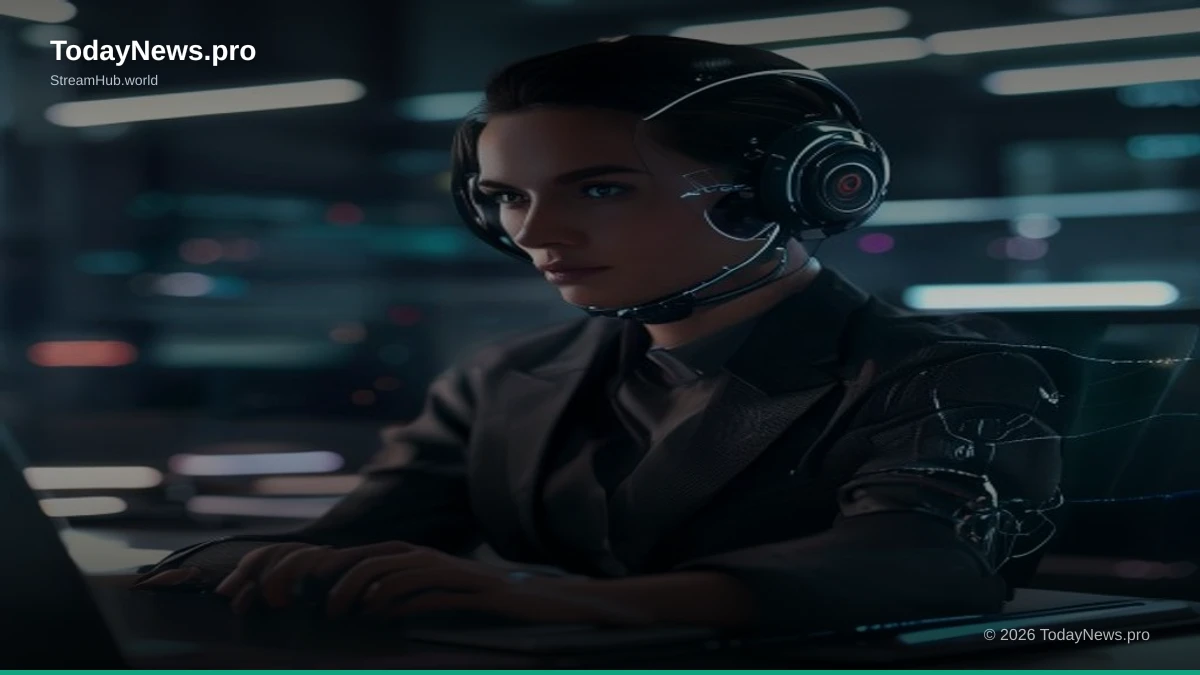
The global AI market is projected to reach $1.8 trillion by 2030, a staggering figure driven by the pervasive integration of artificial intelligence across industries. At the forefront of this transformation, particularly in the realm of personal and professional productivity, is the burgeoning AI Executive Assistant (AIEA). This sophisticated technology is no longer a futuristic concept; it's a present-day reality rapidly reshaping how executives, managers, and even everyday professionals approach their tasks, manage their time, and ultimately, make critical decisions. The AIEA represents a paradigm shift, moving beyond simple automation to offer intelligent, proactive, and context-aware support. It's about augmenting human capabilities, freeing up cognitive load, and enabling a more strategic approach to work. The initial iterations of AI in the workplace were largely confined to back-end processes, but the AIEA brings AI directly to the user's personal workflow, acting as a digital confidant and indispensable partner. ### Defining the AI Executive Assistant An AI Executive Assistant is a sophisticated software system designed to mimic the functions and anticipate the needs of a human executive assistant, but powered by advanced artificial intelligence. This includes natural language processing (NLP) for understanding and responding to verbal or written commands, machine learning (ML) for learning user preferences and predicting future needs, and often, integration with a suite of productivity tools like calendars, email clients, project management software, and communication platforms. Unlike basic digital assistants, AIEAs are characterized by their proactive nature, their ability to handle complex, multi-step tasks, and their capacity to offer insights and recommendations rather than just executing simple commands. They learn from interactions, adapt to individual work styles, and aim to streamline workflows with a level of efficiency and intelligence previously unattainable. The ultimate goal is to offload administrative burdens and cognitive overhead, allowing individuals to focus on high-value strategic thinking and execution. ### The Value Proposition for Executives For overburdened executives, the AIEA offers a compelling value proposition. The sheer volume of emails, meetings, reports, and strategic planning demands constant attention, often leading to burnout and diminished focus on core responsibilities. An AIEA can sift through incoming communications, prioritize urgent tasks, schedule meetings with optimal timing, draft routine correspondence, and even prepare preliminary briefings for upcoming appointments. This not only saves significant time but also reduces the mental energy expended on mundane, repetitive tasks. By handling these operational aspects, executives can dedicate more time to strategic thinking, relationship building, and making impactful decisions, ultimately driving business growth and innovation. The ability to delegate complex administrative workflows to an AI allows for a more agile and responsive leadership style.Beyond the Calendar: Core Functionalities
The capabilities of AI Executive Assistants extend far beyond the rudimentary task management of earlier digital tools. Modern AIEAs are engineered to handle a multifaceted array of responsibilities, transforming the executive's daily operational landscape. They act as intelligent filters, proactive organizers, and efficient communicators, all integrated seamlessly into the user's existing digital ecosystem. The evolution from simple scheduling bots to comprehensive AI partners signifies a profound shift in how work is managed. ### Intelligent Communication Management One of the most impactful areas where AIEAs excel is in managing an executive's communication channels. This involves not just filtering emails but understanding their sentiment, prioritizing based on sender, urgency, and keywords, and even drafting intelligent responses. For instance, an AIEA can identify a press inquiry, flag it as high priority, gather relevant background information from company reports, and draft a holding response for executive review. It can also learn to recognize and respond to common queries from team members or stakeholders, freeing up the executive's time for more strategic interactions. This intelligent filtering reduces the constant barrage of notifications and ensures that critical messages receive prompt attention.85%
Reduction in time spent on email management (estimated)
70%
Increase in meeting efficiency through optimized scheduling
60%
Delegation of routine administrative tasks to AI
Augmenting Decision-Making: From Data to Insight
The most profound impact of AI Executive Assistants is emerging in their ability to move beyond task execution and into the realm of decision support. By analyzing vast datasets and identifying patterns invisible to the human eye, AIEAs can provide crucial insights that inform and enhance strategic decision-making. This shift represents a maturation of AI from a tool for efficiency to a partner in strategic thinking. ### Predictive Analytics and Trend Identification AIEAs can be trained to monitor market trends, competitor activities, and internal performance metrics. By applying predictive analytics, they can forecast potential opportunities or threats, allowing executives to make proactive strategic adjustments. For instance, an AIEA might identify a growing customer segment based on social media sentiment and purchasing patterns, prompting a marketing campaign pivot. Similarly, it could flag a potential supply chain disruption based on geopolitical events and shipping data, enabling mitigation strategies. The ability to anticipate future scenarios is a game-changer for strategic planning.
"The true power of an AI Executive Assistant lies not just in automating the mundane, but in revealing the non-obvious. It's about transforming raw data into actionable intelligence that empowers leaders to see around corners and make bolder, more informed decisions."
— Dr. Anya Sharma, Chief AI Ethicist
### Risk Assessment and Scenario Planning
Decision-making inherently involves risk. AIEAs can assist in this by performing sophisticated risk assessments on proposed strategies or investments. They can model various scenarios, calculate potential outcomes, and highlight the associated risks and rewards. This data-driven approach to risk management can significantly reduce the likelihood of costly mistakes and increase the confidence in strategic choices. For example, before launching a new product, an AIEA could simulate market reception under different pricing strategies or competitive responses, providing a clearer picture of potential success.
Impact of AIEA on Decision-Making Confidence
The Evolution of Personal Productivity Tools
The journey of digital productivity tools has been a long and iterative one, moving from basic organizers to sophisticated AI-driven platforms. The AI Executive Assistant is the latest, and arguably most significant, milestone in this evolution, fundamentally altering the personal workflow of professionals at all levels. ### From Digital Calendars to AI Schedulers Early digital assistants were primarily focused on calendar management – setting appointments, sending reminders. While useful, they were largely reactive. The advent of AI introduced the concept of proactive scheduling, where the system could intelligently suggest optimal times, reschedule based on priorities, and even coordinate across multiple participants with complex availabilities. This leap from mere scheduling to intelligent orchestration represents a major advancement. ### Task Management: Simple To-Do Lists to Intelligent Workflows Task management tools have similarly evolved. Initially, they were simple digital to-do lists. AI Executive Assistants elevate this by understanding task dependencies, prioritizing based on strategic goals, and even breaking down large projects into manageable sub-tasks. They can learn which tasks are typically associated and suggest them together or automate recurring tasks that fall into predictable patterns. This moves task management from a manual chore to an intelligently managed workflow. ### Information Access: From Search Engines to Contextual Knowledge Agents Accessing information has also been revolutionized. While search engines are powerful, they require users to formulate precise queries. An AIEA, however, acts as a contextual knowledge agent. It understands the user's current task or project and proactively surfaces relevant information, documents, or contacts. For example, if an executive is preparing for a board meeting, the AIEA might automatically pull up the latest financial reports, previous board minutes, and relevant market analyses without being explicitly asked.| Tool Evolution Stage | Primary Function | Key Technologies | User Interaction |
|---|---|---|---|
| Early Digital Organizers | Scheduling, basic task listing | Simple algorithms | Manual input, explicit commands |
| Smart Assistants (e.g., Siri, Alexa) | Voice commands, information retrieval, simple automation | NLP, basic ML | Voice and text commands |
| AI-Powered Productivity Suites | Automated workflows, intelligent suggestions, cross-app integration | Advanced ML, NLP, RPA | Proactive suggestions, intuitive interfaces |
| AI Executive Assistant | Proactive support, strategic decision augmentation, complex task management | Deep Learning, advanced NLP, predictive analytics, generative AI | Natural language, adaptive learning, contextual awareness |
Challenges and Ethical Considerations
Despite the immense potential, the widespread adoption of AI Executive Assistants is not without its hurdles. Organizations and individuals must navigate significant challenges related to implementation, data security, and the ethical implications of relying on AI for critical tasks. ### Data Privacy and Security The very nature of an AIEA, which requires deep integration with an individual's digital life and access to sensitive information, raises significant concerns about data privacy and security. Companies must ensure robust encryption, secure data storage, and transparent data usage policies. A breach could expose confidential business strategies, personal communications, and financial data, with potentially catastrophic consequences. Adherence to regulations like GDPR and CCPA is paramount.
"The promise of AI is immense, but we cannot afford to be naive. Robust security protocols and unwavering commitment to user privacy are not optional extras; they are fundamental prerequisites for building trust and ensuring the responsible deployment of AI Executive Assistants."
— Benjamin Carter, Cybersecurity Analyst
### Bias and Fairness in AI
AI systems learn from the data they are trained on. If this data contains inherent biases—whether related to gender, race, socioeconomic status, or other factors—the AI can perpetuate and even amplify these biases. This is particularly concerning when AIEAs are involved in decision-making support, as biased recommendations could lead to unfair or discriminatory outcomes. Continuous monitoring and bias mitigation strategies are crucial. For example, an AIEA used for resource allocation might inadvertently favor certain departments if trained on historically unequal data.
### Over-reliance and Skill Atrophy
A potential concern is that excessive reliance on AIEAs could lead to the atrophy of critical human skills, such as problem-solving, critical thinking, and even basic organizational abilities. If the AI consistently handles complex analysis or delegates tasks, individuals might become less adept at performing these functions independently. Striking a balance between leveraging AI for efficiency and maintaining human proficiency is essential for long-term professional development.
### Implementation Costs and Training
Deploying sophisticated AIEA solutions can involve substantial upfront investment in software, hardware, and integration services. Furthermore, extensive training is often required to ensure users can effectively interact with and leverage the AI's capabilities. For smaller businesses, these costs and complexities can be a significant barrier to entry, potentially widening the productivity gap between large enterprises and SMEs.
The Future Landscape: Integration and Sophistication
The evolution of AI Executive Assistants is far from complete. The coming years promise even greater integration, sophistication, and personalization, further blurring the lines between human and artificial support. ### Deeper Integration with Enterprise Systems Future AIEAs will likely boast deeper integration with a wider array of enterprise systems, including CRM, ERP, HR platforms, and specialized industry software. This will allow for a more holistic understanding of business operations and enable AIEAs to provide more strategic insights and support across the entire organization, not just for individual executives. Imagine an AIEA that can forecast sales based on marketing spend, production capacity, and customer sentiment data from multiple integrated platforms. ### Enhanced Natural Language Understanding and Generation Advancements in Natural Language Processing (NLP) and Generative AI will lead to AIEAs that can understand more nuanced commands, engage in more sophisticated conversations, and generate even more human-like text and content. This will make interactions feel more natural and intuitive, reducing the learning curve and increasing user adoption. The ability to engage in complex, multi-turn dialogues will make the AI feel less like a tool and more like a collaborative partner. ### Personalized Learning and Proactive Adaptation AI Executive Assistants will become even more personalized, learning not just user preferences but also understanding individual work styles, communication patterns, and even cognitive strengths and weaknesses. This will allow them to adapt their support proactively, anticipating needs before they are even articulated. For instance, an AIEA might learn that an executive performs best when given detailed reports for strategic decisions but prefers brief summaries for operational updates, and adjust its output accordingly.5+
Years to widespread adoption of advanced AIEA features
30%
Projected increase in executive productivity with advanced AIEA
95%
Likelihood of AIEA integration into standard enterprise software
Expert Perspectives on the AI Assistant Revolution
Industry leaders and technologists are keenly observing the rise of AI Executive Assistants, offering insights into their potential impact and the future trajectory of work. Their views underscore the transformative power and the necessary considerations for this burgeoning technology.
"We are witnessing a fundamental redefinition of personal productivity. AI Executive Assistants are not just about doing tasks faster; they are about freeing up human potential for higher-order thinking, creativity, and strategic leadership. The executive of the future will be significantly augmented by intelligent digital partners."
— Dr. Evelyn Reed, Futurist and Technology Strategist
"The democratization of executive-level support is a crucial outcome of AI. Previously, such high-level assistance was only available to top-tier executives. AI Executive Assistants are making sophisticated personal productivity tools accessible to a much broader range of professionals, leveling the playing field and fostering innovation across organizations."
— Mark Jenkins, CEO of TechForward Innovations
The integration of AI Executive Assistants into the professional landscape is a testament to the rapid advancements in artificial intelligence. As these tools become more sophisticated, their impact on personal productivity, decision-making, and the very nature of work will continue to expand. Navigating the challenges and embracing the opportunities presented by this revolution will be key for individuals and organizations aiming to thrive in the future of work.
What is the primary difference between a traditional virtual assistant and an AI Executive Assistant?
A traditional virtual assistant typically performs pre-programmed tasks and requires explicit commands. An AI Executive Assistant, conversely, uses machine learning to learn user preferences, anticipate needs, and perform complex, multi-step tasks proactively and contextually. It can also synthesize information and offer insights, going beyond simple task execution.
How can an AI Executive Assistant improve my decision-making?
AI Executive Assistants can improve decision-making by analyzing vast datasets to identify patterns, trends, and potential risks that might be missed by humans. They can perform predictive analytics, simulate various scenarios, and present synthesized information in digestible formats, providing data-driven insights to support more informed and strategic choices.
Are AI Executive Assistants secure enough to handle sensitive business data?
The security of AI Executive Assistants is a significant consideration. Reputable providers implement robust encryption, secure data storage, and strict access controls. However, users and organizations must exercise due diligence, understand the provider's security policies, and implement their own internal data governance measures to mitigate risks. No system is entirely impervious, but leading AIEAs prioritize security.
Will AI Executive Assistants replace human assistants?
It's more likely that AI Executive Assistants will augment, rather than fully replace, human assistants. While AI can handle many repetitive and data-intensive tasks, human assistants bring invaluable qualities like emotional intelligence, complex problem-solving in novel situations, and relationship management that AI currently cannot replicate. The roles may evolve, with human assistants focusing on more strategic and interpersonal responsibilities.