

 Diana Prince
⏱ 15 min
The global AI market for content creation is projected to reach $150 billion by 2027, a staggering testament to the technology's accelerating integration into creative industries. The Dawn of the AI Director
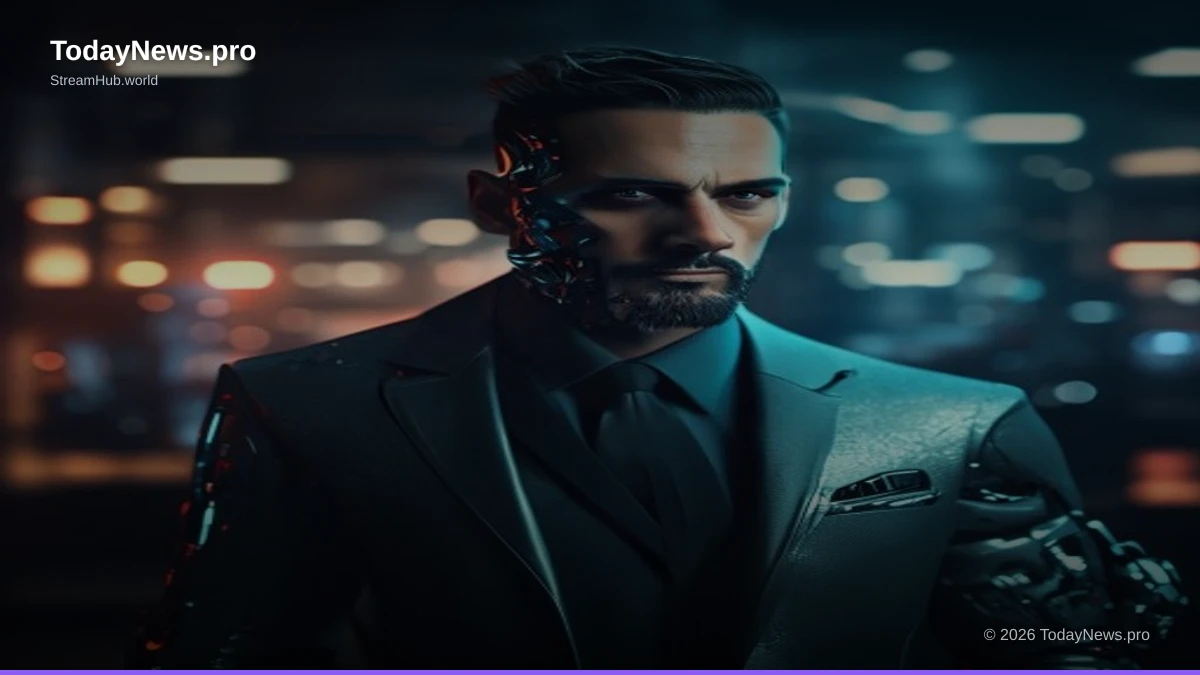
For decades, filmmaking has been a colossal undertaking, demanding vast budgets, intricate logistics, and the coordinated efforts of hundreds, if not thousands, of individuals. The director stands at the creative apex, a visionary weaving together narrative, performance, and visual artistry. However, the advent of generative artificial intelligence is not merely augmenting this process; it is fundamentally redefining it, ushering in an era where AI can act as a co-director, a tireless assistant, or even, in nascent forms, a primary creative force. This revolution, propelled by sophisticated algorithms capable of understanding context, generating novel content, and mimicking human creativity, promises to democratize filmmaking, accelerate production timelines, and unlock unprecedented visual and narrative possibilities. The whispers of "AI director" are growing into a chorus, signaling a seismic shift in how stories are conceived and brought to life on screen.The Algorithmic Muse
At its core, generative AI, particularly large language models (LLMs) and diffusion models, possesses the capability to produce original text, images, audio, and video from simple prompts. This means that a complex screenplay, a character concept, or an entire scene can now be generated with remarkable speed and detail. Tools like OpenAI's DALL-E 3 and Midjourney can conjure photorealistic images and stylistic illustrations based on textual descriptions, while AI-powered video generation platforms are rapidly closing the gap between concept and moving imagery. This algorithmic muse is not bound by the physical limitations of human exhaustion or the traditional constraints of studio infrastructure. It can iterate on ideas tirelessly, exploring countless permutations of a concept before human creatives even settle on a starting point.Beyond Assistance: Towards Autonomy
While early applications focused on AI as a sophisticated assistant for tasks like script analysis or storyboard generation, the current trajectory points towards AI taking on more autonomous creative roles. Imagine an AI capable of not only writing a script but also generating the accompanying visuals, composing the score, and even performing rudimentary editing. This isn't science fiction; it's the direction of current research and development. The "AI Director" moniker, therefore, refers to this emergent capability of AI systems to orchestrate multiple facets of content creation, blurring the lines between tool and creator. This shift necessitates a re-evaluation of creative workflows, intellectual property, and the very definition of authorship in the digital age.From Script to Screen: AIs Generative Power
The journey from a nascent idea to a finished film or digital content piece is notoriously arduous. Generative AI is streamlining and revolutionizing several critical stages of this process, from initial ideation to the final polish. The ability to rapidly prototype concepts, generate diverse stylistic outputs, and automate repetitive tasks is drastically altering production pipelines.Scriptwriting and Narrative Generation
The very foundation of any film is its script. Generative AI models, trained on vast corpuses of literature and film scripts, can now assist in or even autonomously generate narrative structures, character arcs, dialogue, and plot points. These tools can overcome writer's block by offering multiple story avenues, suggest compelling twists, or even adapt existing narratives into different genres. For independent filmmakers or content creators with limited resources, this capability can significantly lower the barrier to entry, transforming a solitary writer's vision into a tangible narrative outline.Concept Art and Storyboarding
Visualizing a script is a crucial step, traditionally involving concept artists and storyboard artists. Generative AI image models excel at this. A director can provide a textual description of a scene, character, or environment, and the AI can produce a multitude of visual interpretations within minutes. This allows for rapid iteration on visual styles, character designs, and set pieces, enabling filmmakers to explore a wider range of aesthetic possibilities before committing to expensive pre-production. The speed at which diverse storyboards can be generated also aids in client presentations and internal team alignment.Character and Asset Creation
Beyond static images, AI is increasingly capable of generating 3D models, character rigs, and digital assets. This can drastically reduce the time and cost associated with creating bespoke digital elements for films, video games, and virtual reality experiences. Imagine generating a unique alien creature or a historically accurate costume design with a few descriptive prompts. This opens up possibilities for richer, more detailed worlds that were previously only achievable with substantial digital sculpting and modeling teams.| Content Type | Traditional Production Time (Estimate) | AI-Assisted Production Time (Estimate) | Key AI Impact |
|---|---|---|---|
| Feature Film Script | 3-12 months | 1-4 months | Rapid ideation, dialogue generation, plot refinement |
| Concept Art (10-20 pieces) | 2-6 weeks | 2-5 days | High-volume visual exploration, style variations |
| Storyboard (100 panels) | 1-3 weeks | 1-3 days | Accelerated visual sequencing, character consistency |
| 3D Character Model | 4-12 weeks | 1-4 weeks | Parametric generation, texture synthesis |
Visualizing Worlds: AI in Cinematography and VFX
The visual spectacle of cinema, from breathtaking landscapes to impossible creatures, is heavily reliant on cinematography and visual effects (VFX). Generative AI is poised to become an indispensable tool in both these domains, offering novel ways to capture, manipulate, and create visual realities.AI-Powered Cinematography Tools
While AI cannot yet physically operate a camera, it is influencing cinematographic decisions and post-production workflows. AI algorithms can analyze footage to suggest optimal camera angles, lighting setups, and color grading schemes. For virtual production, where sets are often created digitally, AI can generate realistic environments and dynamic lighting that respond to virtual camera movements. Furthermore, AI-driven rotoscoping and motion tracking are becoming incredibly efficient, streamlining labor-intensive post-production tasks.The Rise of Generative VFX
Visual effects have long been a domain where creativity meets technical prowess. Generative AI is democratizing and accelerating this process. Tools that can generate realistic textures, apply complex particle effects, or even create entirely new CGI elements from simple prompts are becoming commonplace. The ability to generate variations of magical effects, alien skin patterns, or intricate machinery on the fly significantly reduces the iterative design process. This also extends to creature animation, where AI can assist in generating more lifelike movements and behaviors based on reference data.Virtual Production and AI Integration
Virtual production, which uses real-time rendering engines and LED screens to create immersive environments, is a natural partner for generative AI. AI can populate these virtual sets with dynamic elements, generate procedural environments that adapt to narrative needs, and even create virtual extras. This synergy allows for greater creative control and significantly reduced shooting days, as entire scenes can be filmed within a controlled virtual studio. The "AI Director" can then orchestrate these elements in real-time, adjusting virtual cameras, lighting, and environmental factors on the fly.Estimated Impact of AI on VFX Production Cost Reduction
The Evolving Role of the Human Creator
The rise of the AI Director does not signify the obsolescence of human creativity; rather, it heralds a profound evolution in the roles and responsibilities of filmmakers, writers, and artists. The emphasis shifts from manual execution to conceptualization, curation, and strategic direction.From Artisan to Architect
Human creators will increasingly transition from being the sole artisans executing every detail to becoming architects of AI-assisted workflows. Their role will involve defining the creative vision, crafting precise prompts to guide AI tools, curating the generated outputs, and making critical decisions about aesthetic and narrative direction. The human touch will be essential for infusing projects with genuine emotion, nuanced storytelling, and cultural relevance that AI, in its current state, may struggle to replicate independently.Curators and Prompt Engineers
The skill of "prompt engineering" – the art of crafting effective textual prompts to elicit desired outputs from AI models – is rapidly emerging as a crucial creative discipline. Human creators will become expert curators, sifting through AI-generated options to select the most compelling and aligned results. This requires a keen eye for detail, a deep understanding of narrative, and the ability to communicate complex creative intentions to AI systems. The human creator becomes the ultimate arbiter of taste and quality.Ethical Oversight and Artistic Integrity
With AI capable of generating vast amounts of content, human oversight becomes paramount for maintaining artistic integrity and ethical standards. Creators will be responsible for ensuring that AI-generated content is original, free from bias, and adheres to copyright laws. They will also play a vital role in ensuring that the emotional core and thematic depth of a story are not lost in the automation of its production.90%
of filmmakers anticipate using AI in some capacity within 5 years.
75%
of content creators see AI as a tool for enhancing, not replacing, human creativity.
80%
of studios are investing in AI tools for pre-production and VFX.
Ethical Labyrinths and Creative Frontiers
The rapid integration of generative AI into filmmaking and content creation is not without its complexities. Navigating the ethical landscape and understanding the boundaries of creative possibility are crucial for responsible innovation.Copyright, Ownership, and Authorship
One of the most significant challenges is determining copyright and ownership of AI-generated content. If an AI creates a script or an image, who holds the rights? Current legal frameworks are struggling to keep pace with these advancements. The concept of authorship itself is being questioned. Is the AI the author, the programmer, or the user who prompted the AI? This ambiguity has profound implications for intellectual property law and the creative industries. For further reading on copyright law, consult www.copyright.gov.Bias, Misinformation, and Deepfakes
Generative AI models are trained on existing data, which can contain inherent biases. This means that AI-generated content can inadvertently perpetuate stereotypes or reflect societal inequalities. Moreover, the ability of AI to create highly realistic but fabricated content, known as deepfakes, raises serious concerns about misinformation and the erosion of trust. Safeguarding against the misuse of this technology is a paramount ethical imperative. The Wikipedia entry on Deepfakes provides a comprehensive overview of the technology and its implications.The Future of Originality and Artistic Voice
As AI becomes more adept at mimicking existing styles and generating novel combinations, questions arise about the future of originality and the development of unique artistic voices. Will AI-generated content become homogenized, leading to a saturation of derivative works? Or will it serve as a catalyst for human artists to push creative boundaries in new and unexpected ways, using AI as a unique medium for personal expression? The balance between algorithmic generation and human intent will define this frontier. "The democratization of tools means more voices can be heard, but it also means we must be more vigilant about the quality and ethical implications of the content being produced. The human curator's role is more vital than ever."
— Dr. Anya Sharma, Professor of Digital Media Ethics
The Future of Storytelling: A Collaborative Canvas
The "AI Director" is not a singular entity but rather a paradigm shift towards a more collaborative and fluid creative process. The future of filmmaking and content creation will likely be a hybrid model, where human ingenuity and artificial intelligence work in concert.Human-AI Symbiosis
The most promising future involves a symbiotic relationship between humans and AI. AI will handle the heavy lifting of generating variations, rendering complex scenes, and automating repetitive tasks, freeing up human creators to focus on higher-level conceptualization, emotional resonance, and nuanced storytelling. Imagine a director collaborating with an AI to rapidly explore different visual styles for a scene, with the AI generating multiple options based on the director's evolving creative vision.Personalized and Interactive Narratives
Generative AI opens up exciting possibilities for personalized and interactive storytelling. Content could be dynamically adapted to individual viewer preferences, creating unique narrative paths and experiences. This could range from personalized movie endings to interactive documentaries where viewers influence the direction of the story. The "AI Director" could serve as the engine for these adaptive narratives, orchestrating the flow of information and visual elements in real-time.Democratizing the Dream
Perhaps the most profound impact will be the democratization of filmmaking. Independent creators, small studios, and even individuals with compelling ideas but limited resources will have access to powerful tools that were once the exclusive domain of major production houses. This could lead to an explosion of diverse and innovative content, challenging the traditional gatekeepers of the industry. The cost and complexity of entry are being significantly reduced, allowing more creative visions to come to fruition. "We are moving from a world where filmmaking was a craft of scarcity to one of abundance. The challenge now is to cultivate wisdom and discernment in this new landscape of infinite creative possibility."
— Ben Carter, Lead Technologist, Creative Labs
Economic Implications and Accessibility
The integration of generative AI into filmmaking and content creation has significant economic ramifications, promising both cost efficiencies and new market opportunities.Reduced Production Costs and Timelines
One of the most immediate economic benefits is the potential for substantial reductions in production costs and timelines. Tasks that historically required large teams and extensive time, such as asset creation, visual effects rendering, and even script development, can now be significantly accelerated and made more affordable with AI. This makes ambitious projects feasible for smaller budgets and allows for faster turnaround times for content across all platforms.Emergence of New Business Models
The accessibility of AI tools is fostering the emergence of new business models. Companies specializing in AI-powered content generation, AI-driven post-production services, and platforms for AI-assisted filmmaking are gaining traction. This creates new markets and employment opportunities for those skilled in leveraging these technologies. The "AI Director" concept itself could spawn new service providers and collaborative platforms.Accessibility and Global Reach
Generative AI empowers creators globally, breaking down geographical and financial barriers. Individuals in regions with limited access to traditional filmmaking infrastructure can now produce high-quality content. This global democratization of creative tools has the potential to foster a more diverse and representative media landscape, bringing a wider array of stories and perspectives to the forefront. For a broader economic perspective on AI, explore reports from Reuters Technology.Will AI replace human directors entirely?
While AI can perform many directorial tasks, the human element of artistic vision, emotional intelligence, and nuanced storytelling remains crucial. The future points towards collaboration, with AI as a powerful tool augmenting, not replacing, human directors.
How does AI generate film scripts?
AI models, particularly Large Language Models (LLMs), are trained on vast datasets of text, including existing scripts and literature. They learn patterns, narrative structures, character archetypes, and dialogue styles, enabling them to generate original scripts based on prompts and parameters provided by the user.
What are the main ethical concerns with AI in filmmaking?
Key ethical concerns include copyright and ownership of AI-generated content, the potential for bias in AI outputs, the misuse of AI for creating misinformation (deepfakes), and the impact on the originality and artistic voice of human creators.
Can AI create realistic visual effects?
Yes, generative AI is rapidly advancing in its ability to create realistic visual effects, including generating textures, simulating particle systems, creating CGI elements, and even assisting with animation. This significantly speeds up and reduces the cost of VFX production.