

 Marcus Thorne
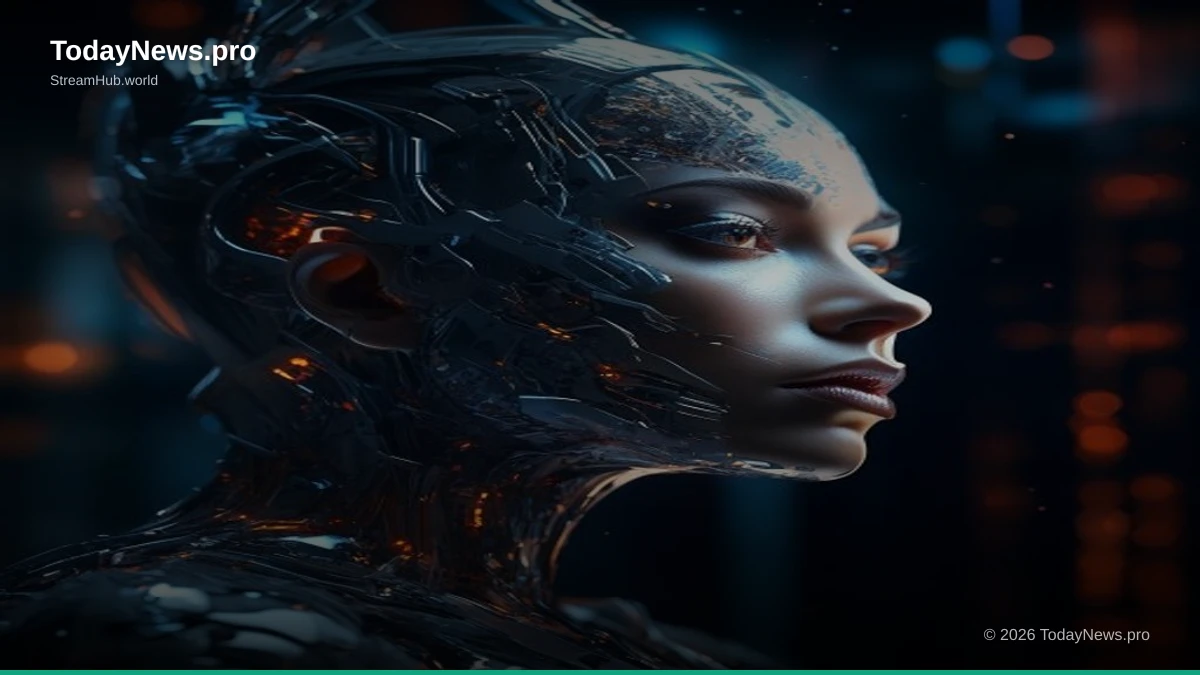
The Dawn of the Algorithmic Muse
The concept of machines creating art is not entirely new, dating back to early computational art experiments in the mid-20th century. However, the recent explosion in AI art's sophistication and accessibility marks a significant inflection point. Tools like Midjourney, DALL-E 2, and Stable Diffusion have moved beyond niche academic projects to become widely available platforms, allowing anyone with an internet connection to conjure visual imagery from textual prompts. This democratization has democratized not only creation but also the ensuing dialogue about art's very definition.The initial wave of AI-generated art often felt derivative, a digital echo of existing styles. Yet, rapid development has seen AI models evolve to exhibit a nascent form of originality, capable of synthesizing novel aesthetics and responding to nuanced textual cues in ways that surprise even their creators. This evolution has shifted the conversation from "Can AI make art?" to "What constitutes art when an algorithm is involved?"
This transformation is not merely technological; it is philosophical and economic. As AI art infiltrates galleries, online marketplaces, and commercial design studios, it challenges long-held notions of authorship, originality, and the inherent value of human creativity. The implications are far-reaching, touching upon intellectual property law, the livelihoods of human artists, and the very essence of artistic expression.
From Pixels to Masterpieces: How AI Creates Art
At the heart of AI art generation lie complex algorithms, primarily generative models. These systems are trained on vast datasets of existing images and their associated textual descriptions. Through this extensive training, the AI learns to discern patterns, styles, and semantic relationships between words and visual elements.Generative Adversarial Networks (GANs)
GANs, a foundational technology, consist of two neural networks: a generator and a discriminator. The generator's role is to create new images, while the discriminator's task is to distinguish between real images (from the training data) and fake images produced by the generator. They engage in a continuous "game" where the generator improves its output to fool the discriminator, and the discriminator gets better at detecting fakes. This iterative process leads to increasingly realistic and novel image generation.Diffusion Models
More recently, diffusion models have gained prominence, powering tools like Stable Diffusion and DALL-E 2. These models work by gradually adding noise to an image until it becomes pure static. Then, they learn to reverse this process, starting from random noise and progressively denoising it to generate a coherent image, guided by a text prompt. This method has proven exceptionally effective at producing high-quality, detailed, and stylistically diverse images.The process often begins with a user-provided text prompt, a descriptive sentence or phrase detailing the desired artwork. For instance, a prompt like "An astronaut riding a unicorn through a nebula, in the style of Van Gogh" instructs the AI to combine specific elements, settings, and artistic influences. The AI then interprets this prompt, drawing upon its learned associations to generate a visual representation.
The Role of Prompt Engineering
The art of crafting effective prompts, known as "prompt engineering," has emerged as a critical skill for users of AI art generators. A well-crafted prompt can elicit nuanced and specific results, while a vague one might lead to generic or unexpected outputs. This involves understanding how the AI interprets keywords, styles, and compositional elements. It’s an iterative process of refining prompts to achieve desired artistic outcomes.The Spectrum of AI Art: Styles and Applications
AI art is not a monolithic entity; it encompasses a vast array of styles, from photorealistic renderings to abstract compositions and imitations of historical art movements. The versatility of AI models allows them to mimic established artistic techniques or forge entirely new visual languages.Mimicking and Innovating
AI can be trained to replicate the brushstrokes of Rembrandt, the surrealist landscapes of Dalí, or the vibrant cubism of Picasso. However, its true potential lies in its ability to blend these influences in novel ways, creating hybrid styles that have never existed before. This can lead to art that feels both familiar and strikingly original.Beyond fine art, AI-generated imagery is finding its way into commercial applications. Graphic designers are using AI to rapidly generate mood boards, create unique illustrations for marketing campaigns, and even design product prototypes. This efficiency can significantly reduce production time and costs, making sophisticated visual content more accessible to businesses of all sizes.
AI Art in Gaming and Entertainment
The gaming industry is a significant adopter of AI art. Developers are using AI to generate vast, detailed game worlds, create character assets, and even design dynamic visual elements that respond to player actions. This allows for richer, more immersive gaming experiences and accelerates the development pipeline. Similarly, in film and animation, AI is being explored for concept art, background generation, and special effects.The Great Copyright Conundrum
One of the most contentious issues surrounding AI-generated art is copyright. Traditional copyright law is designed to protect the original works of human creators. When an AI, trained on countless existing artworks, produces a new image, questions arise about who owns the copyright, if anyone.Training Data and Derivative Works
Many AI art models are trained on datasets that include copyrighted images scraped from the internet without explicit permission from the original artists. This has led to lawsuits, such as one filed by Getty Images against Stability AI, alleging infringement of millions of images. Critics argue that AI-generated art is inherently derivative and infringes upon the rights of the artists whose work was used for training.The U.S. Copyright Office has taken a stance, stating that works created solely by AI are not eligible for copyright protection. However, if a human provides significant creative input, such as through detailed prompting and subsequent editing, the resulting work may be copyrightable. The line between AI-generated and human-authored content remains a complex legal and ethical gray area.
The Fair Use Debate
Proponents of AI art generation often invoke the concept of "fair use," arguing that using existing images for training purposes falls under this doctrine, similar to how human artists learn by studying and referencing the works of others. However, the scale and nature of AI training datasets, often involving millions of images, push the boundaries of traditional fair use interpretations.Legal battles are ongoing, and their outcomes will have a profound impact on the future of AI art and the rights of artists. The debate centers on whether AI models "transform" the source material in a way that constitutes new expression or merely reproduces and recombines existing elements. For more on this developing legal landscape, see Reuters' reporting on AI art copyright disputes.
Authorship, Authenticity, and the Human Touch
The question of authorship is central to the debate. If an AI generates an image, is the "artist" the AI itself, the programmer who created the AI, or the user who provided the prompt? Many argue that true art requires intentionality, consciousness, and lived experience – qualities that current AI models lack.The Value of Human Intent
Human artists infuse their work with personal history, emotions, and a unique perspective shaped by their lives. This subjective element is what many believe gives art its depth and resonance. While AI can mimic styles and create aesthetically pleasing images, it does not possess consciousness or subjective experience. Therefore, some argue that AI-generated art, while visually compelling, lacks the authentic human spirit that defines true artistic creation.The rise of AI art also raises questions about authenticity. If an artwork can be generated instantaneously from a prompt, does it diminish the value of painstaking human craft, skill, and dedication? This sentiment is particularly strong among traditional artists who have spent years honing their techniques. The perceived ease of AI art creation can, for some, undermine the perceived effort and mastery involved.
| Criteria | Human Artist | AI Art Generator |
|---|---|---|
| Intent/Consciousness | High | None |
| Originality (Conceptual) | High (based on lived experience) | Moderate (synthesized from data) |
| Technical Skill (Manual) | High (learned over time) | N/A (algorithmic execution) |
| Emotional Depth | High (expresses personal feelings) | Simulated (based on learned patterns) |
| Speed of Creation | Variable (hours to years) | Fast (seconds to minutes) |
The Collaborator Model
A growing perspective is that AI should be viewed not as a replacement for human artists, but as a powerful new tool or collaborator. In this model, human artists use AI to augment their creative process, explore new ideas, or overcome technical limitations. The human artist retains ultimate creative control, guiding the AI and refining its outputs to align with their artistic vision. This hybrid approach, combining human ingenuity with algorithmic power, may represent the most fertile ground for future artistic innovation.The Economic Impact on the Art World
The integration of AI into the art ecosystem is poised to reshape its economic landscape. For some, it presents new opportunities; for others, it poses an existential threat. The accessibility of AI art tools could lead to a saturation of the market with readily produced imagery, potentially devaluing traditional art forms.Democratization vs. Devaluation
On one hand, AI democratizes art creation, allowing individuals without traditional artistic training to express themselves visually. This can lead to a wider range of voices and perspectives being represented in the art world. However, the ease with which high-quality visuals can be generated raises concerns about market saturation and the devaluation of art that requires significant human effort and skill. The economic viability of artists who rely on traditional methods is a growing concern.Online marketplaces for AI art are burgeoning, with platforms like Artbreeder and NightCafe enabling users to create, share, and even sell their AI-generated creations. This has opened up new avenues for income for individuals who might not have had the means to enter the traditional art market.
Challenges for Human Artists
Many artists express anxiety about their future livelihoods. If businesses can generate illustrations, concept art, and graphic designs for a fraction of the cost and time by using AI, the demand for human artists in these sectors could decline. This necessitates a re-evaluation of how artists can adapt, perhaps by focusing on unique conceptual work, bespoke commissions, or leveraging AI as a tool to enhance their own offerings. The ability to differentiate through unique style, narrative, or client interaction will become paramount. For a broader understanding of AI's impact on creative professions, see Wikipedia's entry on Artificial Intelligence in Art.The Future Canvas: Evolution and Ethical Considerations
The trajectory of AI art is one of continuous, rapid evolution. As AI models become more sophisticated, they will undoubtedly push the boundaries of what we consider art and creativity. This evolution brings with it a host of ethical considerations that society must grapple with.The Ethical Imperative of Transparency
A key ethical consideration is transparency. It is crucial for AI-generated art to be clearly labeled as such. This allows viewers and consumers to understand the origin of the artwork and engage with it accordingly. Misrepresenting AI art as human-created can be misleading and undermine trust within the creative community.Furthermore, the ethical implications of AI's impact on employment are significant. Proactive discussions and policies are needed to support artists transitioning to new roles or adapting their skills in an AI-augmented world. This could involve retraining programs, exploring new artistic niches, or advocating for new forms of intellectual property protection.
Evolving Definitions of Art
As AI art matures, our definitions of art and creativity will likely expand. We may move towards a more nuanced understanding that acknowledges different forms of creation, valuing both human intent and algorithmic innovation. The future may see hybrid art forms where the distinction between human and machine authorship blurs, leading to entirely new aesthetic experiences.Ultimately, the emergence of AI art is not just a technological marvel; it is a cultural and philosophical phenomenon. It forces us to re-examine what it means to be creative, who has the right to create, and what value we place on art in a world where machines can, in their own way, paint and sculpt.